

A siren goes off at 2am. The person at your tool container wonders if it's a fault or a possum, and waits. Now swap the siren for a voice: "You in the dark jacket by the container, you're on camera and police are being called." That's the job of a two way audio security camera tower, and it works because it removes the guesswork.
Here's how a live operator's voice turns intruders around, and when an audio warning beats a siren.
A two way audio security camera tower lets a control room operator watch an intruder on the live feed and speak to them through a speaker on the tower. A specific, live warning tells the person they've been seen by a human, so it often works where a siren gets ignored. Most monitored sites use both: voice first, then siren and strobe if the person stays.
On a camera tower, two-way audio means a speaker on the mast that an operator can talk through from a remote control room. On some systems a microphone carries sound back, so the operator can hear a reply. That's an audio talk-down.
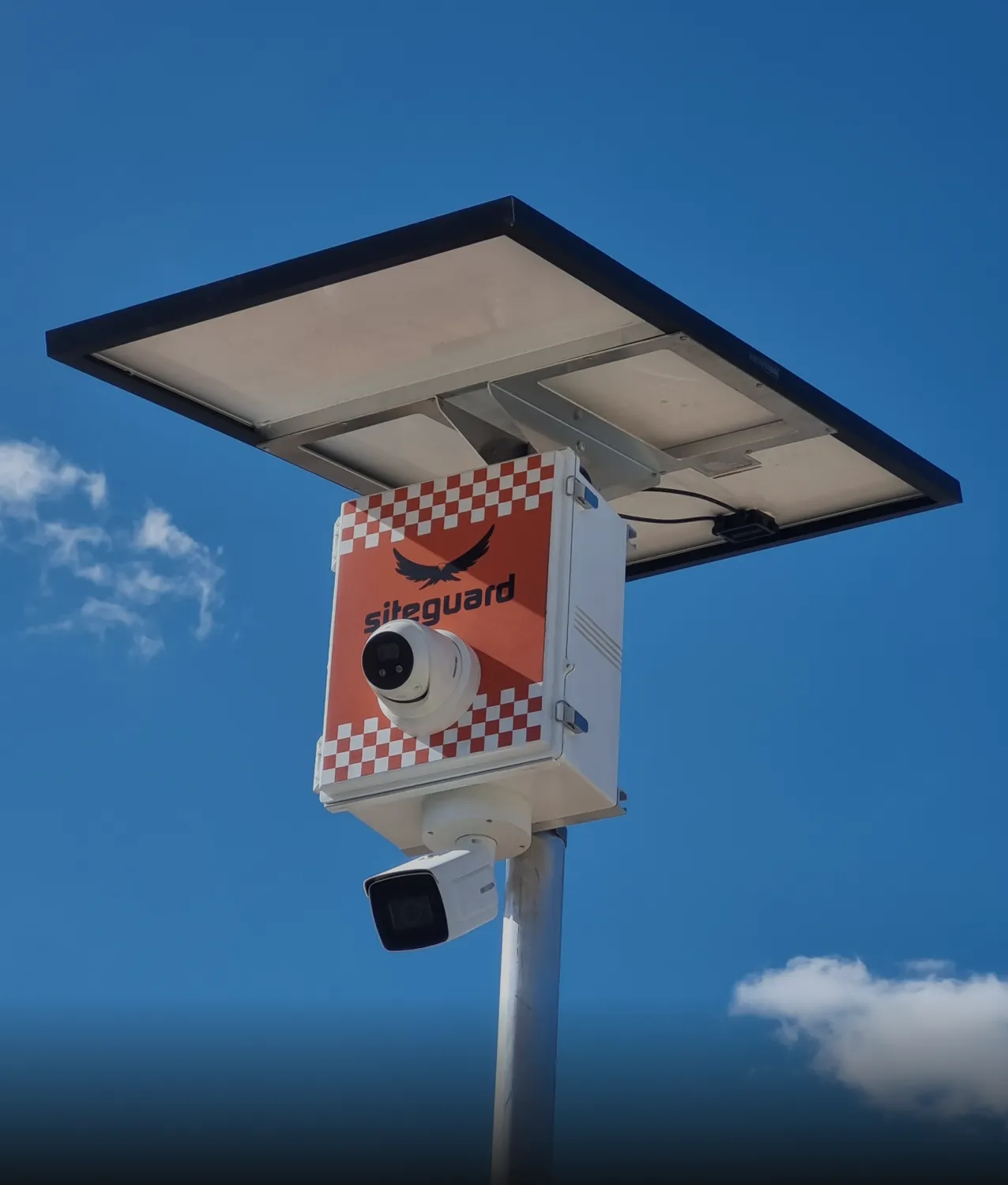
The speaker only matters if someone is behind it. On Siteguard's solar CCTV towers, the Single Cam lists siren and audio among its features, and the Twin Cam adds siren, strobe and 180° coverage. The deterrent is the operator who verifies the alarm and speaks while the person is still inside the fence.
People who climb a site fence are betting on not being seen. A siren doesn't settle that bet. It might be automatic, and where alarms go off for wildlife, people learn to wait it out.
A live voice settles it. When the operator describes their clothing and location, the intruder knows a human is watching. A pre-recorded message says the same thing to a kangaroo as to someone with bolt cutters.
If the person leaves, nothing is taken. If they stay, the operator has a confirmed threat and a clear description for police.
Running an active build site?
See how Siteguard covers active build sites with rapid deployment, perimeter coverage and real-time incident alerts.
Siteguard for constructionThe right first response depends on who's on site, who lives nearby and how close the person is to the tower.
| Situation | Better first response | Why |
|---|---|---|
| One person near a container or plant | Live voice | Shows they've been seen, without waking the street |
| Someone who might belong there | Live voice | A worker back for a phone isn't treated as a thief |
| Infill site next to houses | Live voice, siren if needed | Repeated sirens annoy neighbours and invite complaints |
| Group spreading across the site | Siren and strobe | Noise and light reach everyone at once |
| Person far from the speaker or near running plant | Siren and strobe | A voice won't carry; a siren and flashing light will |
Noise rules show how little room there is for long alarms near homes. In NSW, a building intruder alarm installed since December 1997 must stop sounding within 5 minutes, according to the NSW EPA's intruder alarm fact sheet. A tower siren isn't a building alarm, but neighbours and councils have little patience for long alarms. A voice doesn't carry that cost.
Use both in order: voice first, then the siren and strobe if the person ignores it. For how the siren, strobe and lights compare on their own, see sirens, strobes and lights on CCTV towers.
A talk-down is one step in a chain:
The full sequence is in what happens when monitored cameras detect an intruder.
A speaker needs someone behind it
Siteguard's Australian-based control room verifies every alarm, issues audio warnings and the siren, and escalates to authorities when required, weekends and public holidays included.
How control room monitoring worksA voice warning fails for simple reasons: the speaker is too far away, or the operator is challenging your own crew.

Surveillance and privacy rules differ between states and territories, and recording audio is more restricted than video in several of them. Check the rules for the state your site is in before recording any audio.
For scheduled operator checks as well as alarm response, see virtual security guards for construction sites.
It's a speaker on the tower that a remote operator talks through while watching the live feed, to warn intruders they've been seen. On some systems a microphone lets the operator hear a reply.
A live warning that describes the person tells them a human is watching. Not everyone leaves, so the operator follows up with the siren and strobe and escalates to police when required.
A voice suits single intruders, sites near houses and people who might belong on site. A siren and strobe suit groups, noisy sites and people out of earshot of the speaker. Most monitored sites use the voice first and the siren if the person stays.
Rules differ between states and territories, and recording audio is more restricted than video in several of them. Check the rules for your state before recording any audio.
A live talk-down does, because a person has to see the intruder and speak. Pre-recorded messages play automatically but say the same thing every time, so they're easier to ignore.