

A road crew knocks off at five and the job stays on the shoulder. Message boards, portable traffic lights, a roller and a fuel trailer sit beside a public road all night, with no fence around them. A roadworks CCTV camera has to watch all of that, then move when the work front does.
Here's what to cover, where each unit goes and how to keep it working as the job moves.
A roadworks CCTV camera works best on a solar-powered, road-certified trailer that tows to each new work front. Park it over the plant and traffic management assets left out overnight, set intruder alerts and sirens, and use a 24/7 control room so a real operator verifies each alarm and responds.
A road job isn't one site. It's a strip of road with open access along its whole length, and three things need eyes on them after knock-off: the active work front, the traffic management assets and the plant parked nearby.
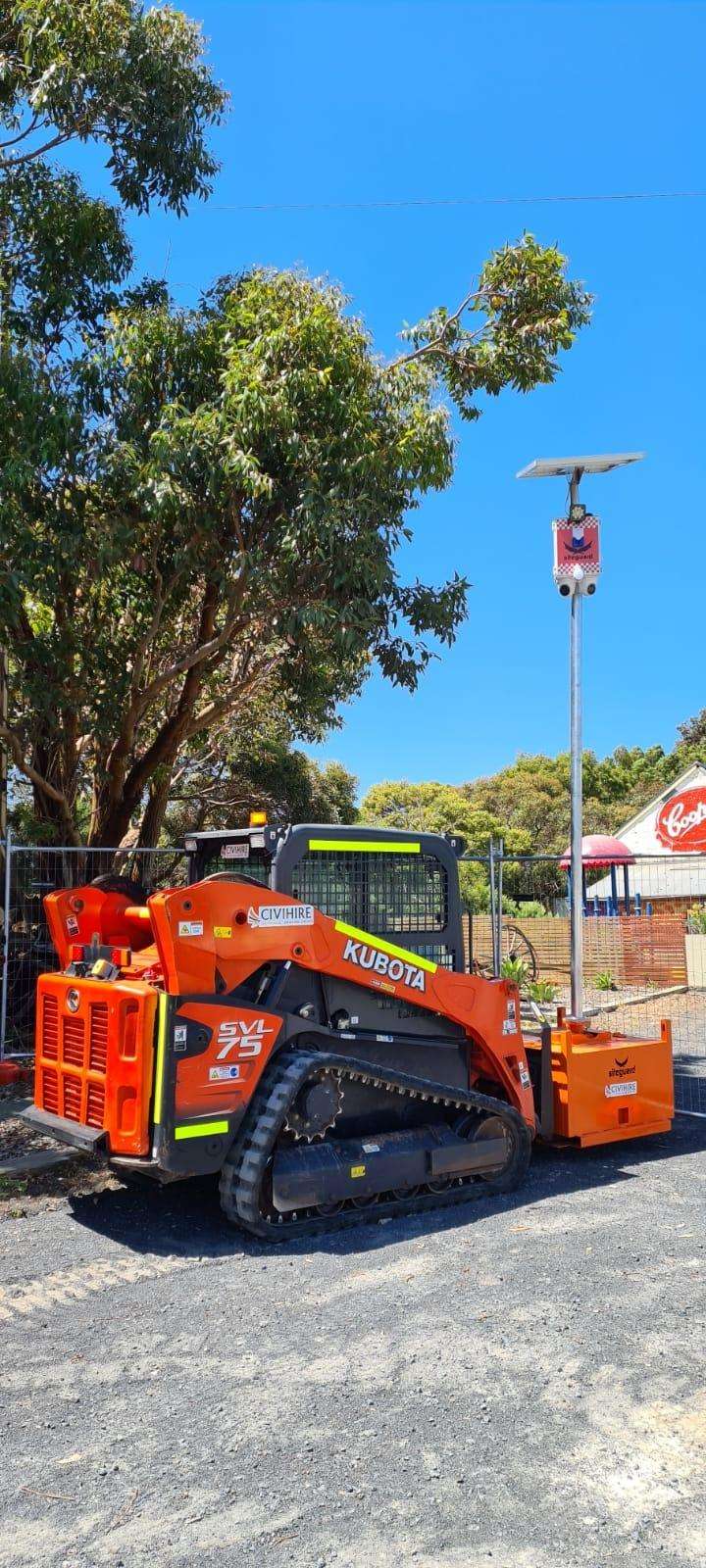
The losses are real. Balonne Shire in Queensland recorded four fuel thefts at council roadworks sites between 24 March and 2 April 2026: around 400 to 500 litres gone from graders and rollers, with machinery damaged to reach the tanks. In July 2026, police were investigating the alleged theft of a mini excavator and a sign trailer from a council depot in Wellington, NSW, in a haul reported at more than $140,000.
The section you're working this month is further down the road next month. A camera that needs cabling and an electrician to move is the wrong camera for this job. Solar CCTV trailers fit because they're road-certified and self-contained: hitch up, tow to the next section, raise the mast.
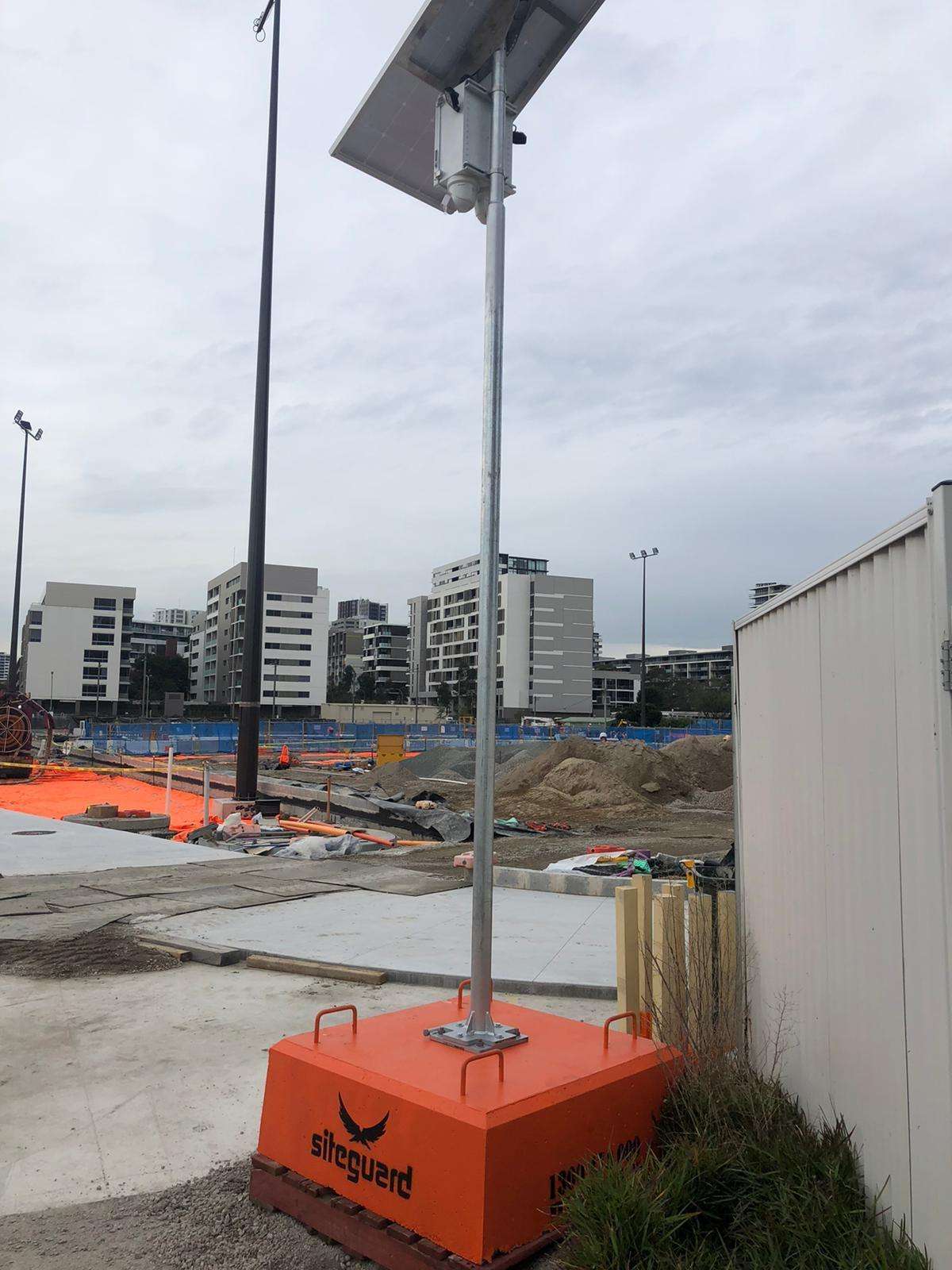
Siteguard trailers carry solar power, GPS, UHF radio, 3G/4G and a steel chassis, with options including Starlink, lighting and custom camera setups. The GPS helps when units are strung out along a corridor. Tie each move to the program, and keep it in working hours, because the unit stops recording until it's reconnected. Our guide to moving and adding site cameras covers what each relocation takes.
"We run 6 construction teams and we can easily relocate the system between teams as required, without the need for specialist staff to pack up transport and set up." Michael, Construction Manager, Tamworth Regional Council
Running a road or civil package?
See the setup Siteguard recommends for civil and infrastructure work, from long-range towers to Starlink connectivity and AI reports.
Siteguard for civil workSome gear can't go back to the compound, because it's still working overnight. Message boards, portable traffic lights, signs and barriers stay out beside live traffic, within easy reach.
Losing them hurts twice: the replacement cost and the safety gap. In 2024, Bega Valley Shire Council said local contractors had faced repeated thefts of road safety signs and warned that it put residents and road users at risk. If a sign disappears at 2am, the first person to find out may be a driver.
Aim the camera along the run of assets, not across the road. Siteguard's Pan & Zoom 360° Cam adds remote control and zoom up to 1km, which suits a long, straight section. Draw detection zones around the assets and keep them off the traffic lane, or every passing ute becomes an alarm.
Make it a knock-off rule: plant comes back to one spot and parks inside the camera's view. On a road job that might be a wide shoulder, a side track or a temporary compound. The Twin Cam covers 180° with smart alerts, siren and strobe, so it gives a would-be thief a reason to leave before they reach the fuel trailer.
If a compound holds position for months, a solar camera tower on a compact base does the job from a tighter spot. For placement on bigger packages, see our guide to civil construction site security cameras.
| Zone | Main risk | Suggested setup |
|---|---|---|
| Active work front | Plant and materials left in the open | Solar CCTV trailer, moved with the crew |
| Traffic management run | Theft and tampering | Pan & Zoom 360° Cam |
| Plant and fuel compound | Fuel, tools and machinery | Twin Cam, plant parked in view |
| Compound entry | Unlogged vehicles | Number plate recognition |
| Corridor past the mobile network | No live view or alerts | Starlink Tower |
Need cover that moves with the crew?
Siteguard trailers are road-certified and self-contained, with GPS, 3G/4G, UHF radio and a steel chassis.
See the trailer rangeA recording tells you what happened. It doesn't stop it. With control room monitoring, an Australian-based operator verifies every alarm before action is taken, issues audio warnings and siren activation, and escalates to the relevant authorities when required, 24 hours a day. Beside a live road, that human check matters, because plenty can trip a sensor.
Coverage is the other gap on a long job. Past the mobile network, Starlink camera systems add satellite connectivity, so live view and alerts keep working.
Send that plan with your site security camera hire enquiry, and the quote can price real moves instead of guesses.
A solar-powered, road-certified CCTV trailer suits most road jobs, because it needs no mains power and tows to each new work front.
Yes. A trailer hitches up, tows to the next section and raises the mast, with no electrician needed. The unit stops recording until it's connected again, so move it while the crew is on site.
They need a connection for live view and alerts. Siteguard trailers carry 3G/4G, and the Starlink Tower uses satellite connectivity for remote locations without 3G or 4G coverage.
Siteguard doesn't publish hire rates, because a quote depends on the unit, term, monitoring, connectivity and delivery. Our guide to site security camera hire costs breaks down each line.
It depends on where the job is. Surveillance and privacy rules differ between states and territories, and audio is treated more strictly than video in several of them. Check the rules for your state, and use signage.