
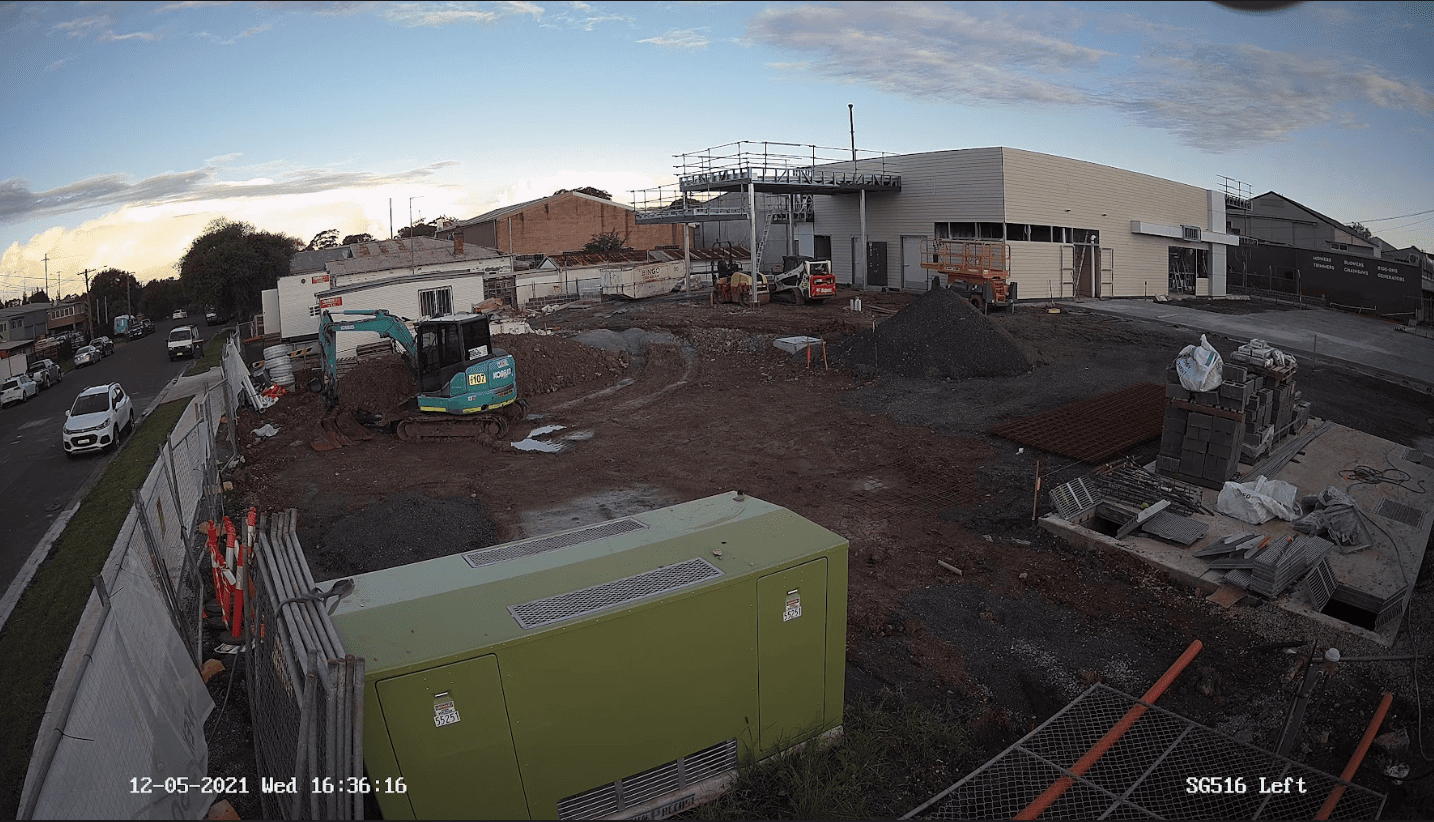
A highway duplication that runs for kilometres. A council works depot with trucks out before dawn. A treatment plant upgrade an hour from the nearest town. Civil works, public works and depots share a problem that a fenced building block doesn't have: they're big, they move, and someone outside the project is watching how the money is spent.
Infrastructure project site security has to cover long boundaries with no mains power, keep up as work zones shift, and produce evidence that stands up in front of an auditor, a council officer or the police. This guide breaks the job down by project type, then covers procurement, compliance and how to build a coverage plan that holds from site establishment to handover.
Infrastructure project site security is the mix of cameras, deterrence, monitoring and access records that protects civil works, public works and depots, usually without mains power or a guard on site. The standard setup is solar camera towers or trailers at access points and plant yards, 4G or Starlink connectivity, live monitoring after hours, and number plate recognition at the gates.
Most site security advice is written for a building site: one block, one gate, a fence and a site shed. Infrastructure work rarely looks like that. A road upgrade can run past a dozen informal access points. A pipeline crosses paddocks and creek lines. A council depot works every day of the year. Infrastructure project site security has to protect plant, materials and the public across all of these, often where mobile coverage gives out.
The volume of work is huge. Infrastructure Australia's 2025 Infrastructure Market Capacity report puts the major public infrastructure pipeline at $242 billion over the five financial years from 2024-25 to 2028-29, with transport alone accounting for $129 billion, or 53% of it.
Public money brings scrutiny. Public works answer to a client agency, a superintendent and often the residents next door. So the security plan has two jobs: stop theft and damage, and keep a record of what happened on site that the project team can hand over when someone asks.
The threats overlap, but each type of project has its own weak spot. Find the row closest to your job, then read the matching section below.
| Project type | Main risks | What usually works |
|---|---|---|
| Civil works and plant yards | Plant, fuel and tool theft; after-hours trespass across a large footprint | Long-range PTZ towers on the compound, live monitoring after hours |
| Remote civil corridors | No power or 4G, equipment left unattended for days, long response times | Solar towers with Starlink, remote viewing, alerts to the project team |
| Roadworks | Damage to traffic management assets, plant parked beside live traffic, a work zone that moves | Trailers that tow to the next section, siren and strobe deterrence |
| Rail corridors | Trespass, cable theft, access points spread along the corridor | Towers at access gates and laydown areas, monitored alerts |
| Water and utilities | Remote assets, owner security obligations, contractors coming and going | Access logs, ANPR at gates, recorded evidence |
| Council and public works | Vandalism, illegal dumping, public safety around open works | Relocatable trailers and towers, ANPR for vehicle evidence |
| Depots and truck yards | Fuel and goods theft, disputed vehicle movements and loads | ANPR at entry and exit, perimeter towers, monitoring of critical zones |
Two things hold across every row. The unit has to run without mains power or cabling, and someone has to act on an alert in the minutes that matter, not find the damage at 7am.
Running a civil or infrastructure job?
See the setup Siteguard recommends for large, remote civil projects: long-range towers, Starlink connectivity, Siteguard Foreman and AI reports.
Siteguard for civil worksBulk earthworks and civil packages leave expensive plant parked in the open overnight, usually in a compound at the edge of a big footprint. Thieves go for fuel, attachments and tools. And a site that changes shape every few weeks leaves gaps a fixed camera can't follow.
On most civil jobs the anchor is a Pan & Zoom 360° Cam tower over the plant compound, which gives 360° PTZ control and up to 1km zoom for long views across open ground. Twin Cam towers on the main gates add 180° coverage with siren and strobe. We cover unit placement and after-hours coverage in civil construction site security cameras.
Once a project runs past the end of the mobile network, the hardware question changes. Solar power handles the energy side, and a Starlink-connected tower keeps live view and alerts working. For a job-by-job comparison of towers, trailers, Starlink and ANPR, read the best construction cameras for remote civil sites.
Renewable energy and transmission projects sit close to this category: remote, spread out and running for years. Our remote site security guide covers power, connectivity and monitoring for sites where nobody is around for days at a time.
Linear projects are the hardest to secure because the work zone keeps moving. On roadworks, plant and traffic management gear sit beside live traffic overnight, and the section under construction this month is further down the road next month. A camera that needs cabling and an electrician to move is the wrong camera for this job.
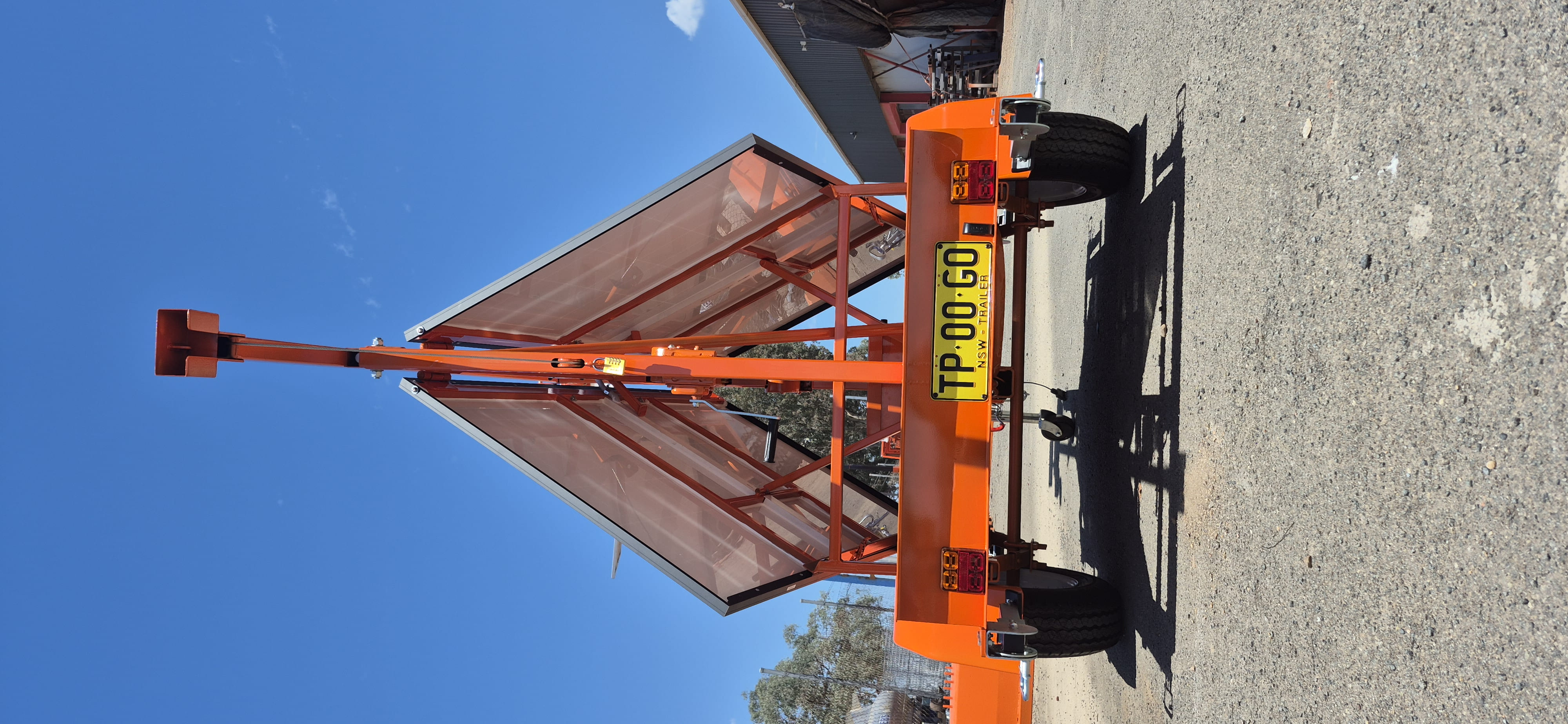
Solar CCTV trailers suit road jobs because they're road-certified and self-contained. Tow the unit to the next section, set it up and it's working again. Siteguard's surveillance trailers carry solar power, GPS, UHF radio, 3G/4G and a steel chassis, with options including Starlink, lighting and custom camera setups. The guide to roadworks CCTV cameras covers moving work zones and plant parked overnight.
Rail corridors carry a different risk profile: trespass on the corridor, cable theft, and possession works where crews and plant are on track for a short, intense window. Coverage belongs on access gates and laydown areas, and on the points where people actually get in, not just the official entry. See rail corridor security cameras for placement on corridor and possession works.
Pick the right tower for each work front
Single Cam, Twin Cam, Pan & Zoom 360° Cam or a custom mix: compare the four Siteguard towers and what each one covers.
See the tower rangeTreatment plant upgrades, pipelines and reservoir works combine remote locations with assets the public relies on. Contractors come and go, gates get left open, and the asset owner wants to know who was on site and when. On these jobs an access log matters as much as intruder detection.
Some asset owners also carry formal security duties. According to the Cyber and Infrastructure Security Centre, the Security of Critical Infrastructure Act 2018 applies to 11 sectors, including water and sewerage, energy and transport, and some entities must keep a written risk management program. Contractors on those assets are often asked to fit their site security around the owner's requirements, so ask the client what they expect before you lock in a setup.
Number plate recognition on the gate and cameras on the compound give the client a record they can check against permits and inductions. Water authority site security cameras covers treatment plants, pipelines and reservoirs in more detail.
Councils juggle short jobs and standing problems. Footpath renewals, drainage works and park upgrades sit in public view, often beside homes, schools and playgrounds. Vandalism on open works is common, and so is the after-hours visitor who treats an unsecured excavation as a shortcut. Public works need security that's visible, quick to install and easy to move when the job wraps up.
Trailers and towers fit that pattern. One trailer can cover a park upgrade for a fortnight, then an event, then a works depot. Council CCTV trailer hire explains how councils use trailers for events, hotspots and depots, and public works security camera hire covers short-term cameras for parks, footpaths and drainage.
Illegal dumping is the other recurring council job, and catching an offender takes evidence of the vehicle, not a blurry figure at midnight. Siteguard's number plate recognition cameras read and time-stamp every plate, store it in a searchable vehicle database, and use night vision with built-in lighting for low-light reads. Illegal dumping cameras for councils covers hotspot placement and evidence quality.
"We run 6 construction teams and we can easily relocate the system between teams as required, without the need for specialist staff to pack up transport and set up." Michael, Construction Manager, Tamworth Regional Council
Depots and truck yards run on vehicle movements. Fuel, goods and vehicles are the targets, and Siteguard's logistics yard and depot page points out that cargo and fuel are often taken by people who already have legitimate site access. That changes the plan. Perimeter cameras catch the break-in over the back fence, but ANPR at the gate answers the question that comes up far more often: which vehicle came and went, and when.
The logistics setup Siteguard recommends pairs an ANPR camera with Starlink connectivity, Siteguard Foreman and Control Room Monitoring on critical zones such as fuel stores and loading docks. Recorded footage then helps settle disputes and insurance claims rather than leaving them to memory. Depot security cameras covers perimeters, fuel and yard ANPR in detail.
Selling security into public works isn't like quoting a builder over the phone. Agencies, councils and tier-one contractors buy through panels, prequalification schemes and supplier portals, and the paperwork lands before the site visit. Expect to be asked for:
Two questions now come up on most government jobs. The first is camera origin: many agencies ask where cameras are made and whether they meet NDAA requirements, which NDAA-compliant security cameras explains. The second is data sovereignty, meaning whether footage stays in Australia. Get both answers in writing from any supplier.
Estimators pricing a job can use the list of CCTV requirements to include in a construction tender. Agencies hiring direct should read security camera hire for government agencies for procurement routes and what to ask a hire provider. Siteguard offers towers for hire or purchase, which suits agencies weighing a short project against a standing fleet.
Cameras on public works capture the public, so privacy rules bite harder than on a fenced private block. The Office of the Australian Information Commissioner says the Privacy Act covers Australian Government agencies and organisations with annual turnover above $3 million, and that covered entities must tell people they may be filmed before recording, keep footage secure, and destroy or de-identify it once it's no longer needed.
State and territory surveillance laws apply on top, and they differ. Workplace surveillance rules can cover your own crews, and audio recording is treated more strictly than video in several states. A practical baseline:
None of this is legal advice. Treat it as a checklist to take to your client or legal team before the cameras go up, and confirm the rules for your state.
A coverage plan turns the risks above into a unit list and a response plan. Work through it in this order:
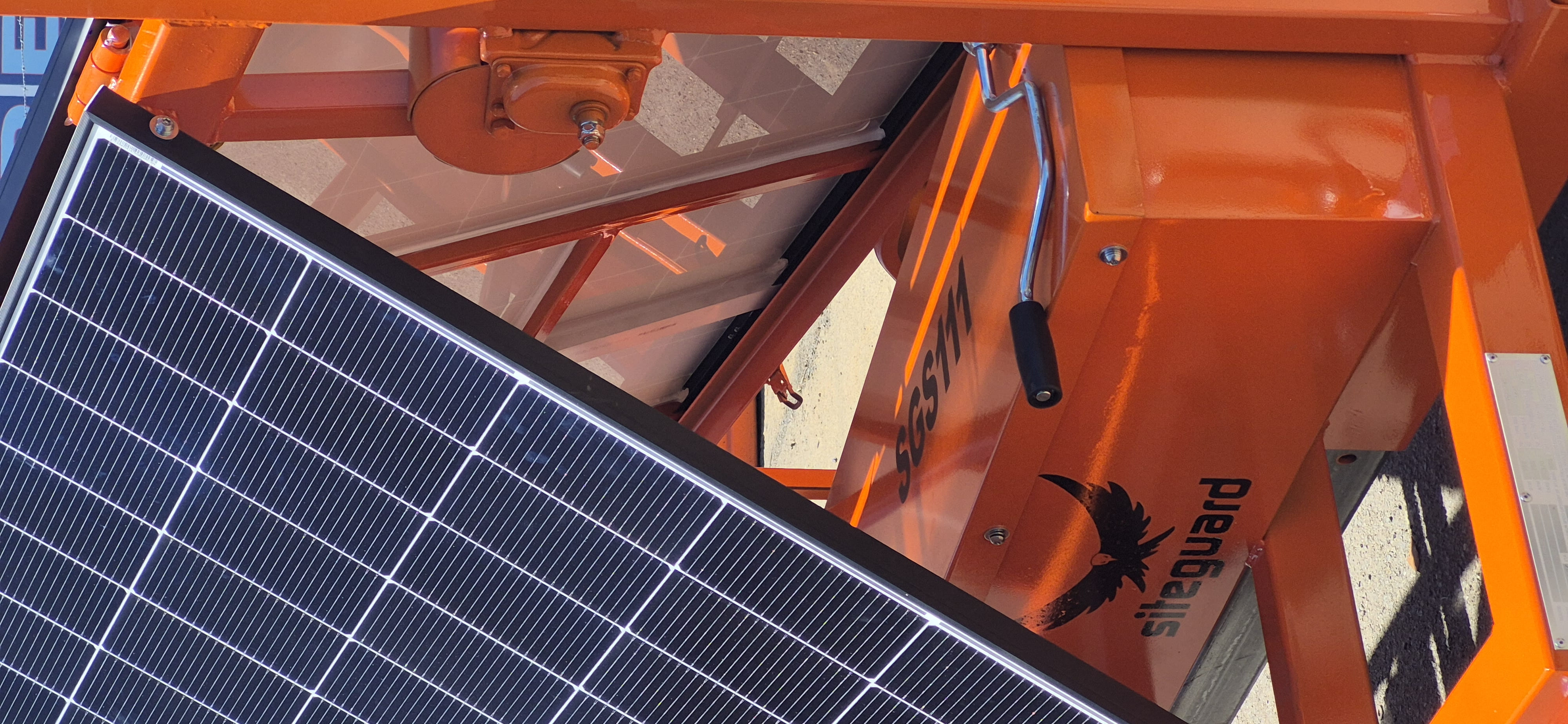
For reporting, Siteguard Foreman puts every camera, alert and recording across your sites into one browser-based dashboard, with event reports by date and category. On audited public works, AI Reporting turns footage into event summaries and compliance insights ready to share.
The monitored site security guide walks through what happens between a camera detecting an intruder and an operator responding. For hire terms and options across Australia, start with site security camera hire. Revisit the plan at every stage. Infrastructure jobs change shape, and the coverage plan should change with them.
Most failures on infrastructure jobs aren't about the camera. They come from a plan that was right for week one and never updated, or from nobody owning the alerts. These are the mistakes that show up most:
Fixing these costs very little compared with replacing stolen plant or losing a week to a damaged work zone. Build the checks into your site establishment process and your stage handover meetings.
Each unit in Siteguard's range suits a different part of an infrastructure job. The features below are as listed on Siteguard's product pages.
| Unit | Listed features | Best fit on infrastructure work |
|---|---|---|
| Single Cam tower | 4K 8MP, 95° field of view, 24/7 recording, 30-day storage, intruder alerts, siren and audio | A single gate, fuel tank or container |
| Twin Cam tower | 180° field of view, smart alerts, siren and strobe, battery backup | Compound perimeters and main gates |
| Pan & Zoom 360° Cam tower | 360° PTZ, up to 1km zoom, low-light, remote control, live alerts | Large plant yards and open corridors |
| Custom tower | Mix and match cameras on one tower, including 2x 360° PTZ | Complex compounds where blind spots aren't acceptable |
| Trailer | Road-certified, solar, GPS, UHF radio, 3G/4G, weather station | Roadworks and short public works jobs |
| Starlink Tower | Satellite connectivity, wind rated, vandal-resistant base, forklift and lifting hook | Sites with no 3G or 4G coverage |
| Number Plate Recognition | Logs every plate, searchable vehicle database, night vision, instant alerts | Depot gates, council hotspots and controlled access |
For corridors beyond mobile coverage, Siteguard's Starlink camera systems are built for roads, pipelines, rail and utility projects where traditional security is hard to deploy. Not sure what mix your project needs? Tell Siteguard the project type, environment and budget and the team will recommend a setup.
It's the cameras, deterrence, monitoring and access records that protect civil works, public works and depots. Most infrastructure sites have long boundaries, little or no mains power and work zones that move, so solar camera towers and trailers with 4G or Starlink connectivity are the usual base, with live monitoring after hours.
Use solar-powered camera towers or trailers so no mains power or cabling is needed, and connect them through Starlink where 3G or 4G doesn't reach. Pair the cameras with alerts or live monitoring so someone responds to an intrusion while it's happening.
Councils use trailers for short public works such as park, footpath and drainage jobs, for events, for illegal dumping hotspots and for works depots. Because a trailer is self-contained and road-certified, it can move to the next job without an electrician or new cabling.
Expect requests for insurances, WHS documentation, a capability statement with comparable projects, equipment specifications including camera make and model, where footage is stored, and service terms covering installation, monitoring and off-hire. Many agencies also ask about NDAA compliance and data sovereignty.
Signs at every entry point are common practice and help with notice obligations. The Privacy Act requires covered organisations to tell people they may be filmed, and state and territory surveillance laws add their own rules, so check the requirements for the state your site is in.
Yes. Solar trailers tow to the next section of a road or corridor, and towers can be relocated between work fronts as stages finish. Build the moves into your coverage plan so protection keeps pace with the work.