
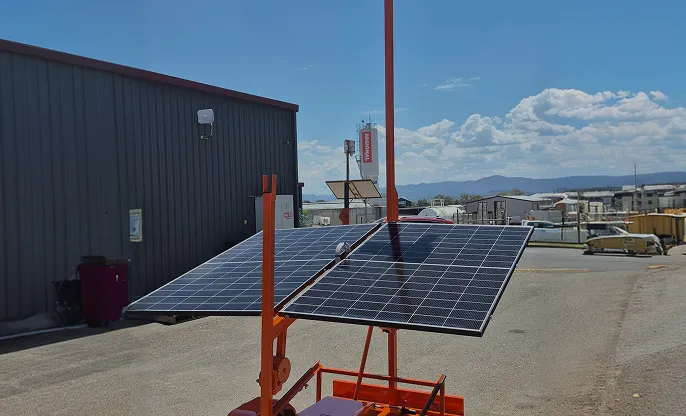
A trailer and a tower can carry the same cameras, solar panel and 4G or Starlink link. What separates them is how the unit gets onto your site, how often it moves, how much ground it takes and what each move costs. Get the CCTV tower vs trailer call wrong and you pay in plant hire, blind spots or a unit that can't get past the gate.
Here's how they compare on site access, relocation, footprint, mast height and cost, plus a decision guide.
CCTV tower vs trailer: a CCTV trailer carries the cameras, solar power and mast on a road-certified chassis you tow, so it suits short jobs, events and sites that move often. A CCTV tower sits on a compact base placed by plant or truck, so it suits perimeters that hold for weeks or months and tight spots a trailer can't reverse into.
Both formats run the same solar power loop, which our guide to how solar CCTV towers and trailers work explains. The differences that decide your choice are practical ones.
| Factor | CCTV tower | CCTV trailer |
|---|---|---|
| Getting it on site | Delivered and set down by truck or plant | Towed in behind a ute or truck |
| Moving it | Plant or a truck for each move | Hitch up and tow, on site or between towns |
| Footprint | Compact base for fence lines, hardstand and corners | Chassis and drawbar; needs a level spot and room to reverse |
| Mast height | Similar job on both: compare extended height and wind rating | |
| Cost drivers | Delivery, setup, plant for each move | Tow time, delivery distance, number of moves |
| Best for | Perimeters that change stage by stage | Short jobs, events, sites that move often |
Start at the gate. A CCTV trailer needs a tow vehicle, a route it can follow and room to back it into position. On a civil job with a gravel haul road, easy. On a CBD build boxed in by hoarding and scaffold, maybe not.
Towers come in differently. Siteguard's solar camera towers are built for rapid deployment and set down rather than towed. The Starlink Tower, for example, has a forklift and lifting hook, so a forklift already on site can place it where a trailer can't reach.

Towing it yourself? Check the tow vehicle. Under the NSW Government's towing rules, the loaded trailer can't exceed the lowest of the towbar, vehicle, trailer and tyre ratings. Other states set their own rules.
Need cover that tows in and out?
Siteguard trailers are road-certified and self-contained, with GPS, 3G/4G, UHF radio and a steel chassis. See how they're set up for temporary and off-grid sites.
See the trailer rangeCount the moves first. A unit on one corner for six months moves twice: in and out. One following a road crew or a run of events might move weekly.
That's where CCTV surveillance trailers earn their keep. Hitch up, tow, raise the mast. If the next job is in another town, there's no truck booking. Siteguard trailers also carry GPS, handy when units are spread across jobs.
Towers move too, just with plant. On a staged build, shifting one to the next stage is a short job with a forklift on site. Either way, relocation shouldn't need a specialist crew:
"We run 6 construction teams and we can easily relocate the system between teams as required, without the need for specialist staff to pack up transport and set up." Michael, Construction Manager, Tamworth Regional Council
A trailer brings its chassis and drawbar everywhere, and needs a level spot with room to back in. On a tight urban block, the drawbar can eat into a truck turning path or pedestrian route.
Size affects how often a unit gets used, too. In a 2020 report to AlburyCity councillors on mobile CCTV, staff noted one council deployed its trailer only sporadically because of its size.
A tower base takes less ground and sits where a trailer can't: beside the site office, on hardstand at a depot gate, between stacked materials. That suits fence-line perimeters that stay put.
Walk the spot before you book: a level pad for a trailer, forklift access for a tower, and no shade on the panel at 9am or 3pm.
Holding a perimeter for months?
Compare Siteguard's Single Cam, Twin Cam, Pan & Zoom 360° and Custom towers, available to hire or purchase and backed by a 24/7 control room.
See the tower rangeLess than you'd expect. Both raise the cameras on a mast to see over hoarding, containers and parked plant. At fence height, a camera sees the fence. Raised, it sees the far side of the laydown.
The camera on top does more work. Siteguard's Twin Cam tower covers 180° with smart alerts, siren and strobe. The Pan & Zoom 360° Cam adds remote PTZ control with zoom up to 1km. Trailers take custom camera setups, with lighting and Starlink options.
On any quote, ask for the mast's extended height and wind rating. Height and lens also set how many units you need, which our guide to how many security cameras a construction site needs works through.
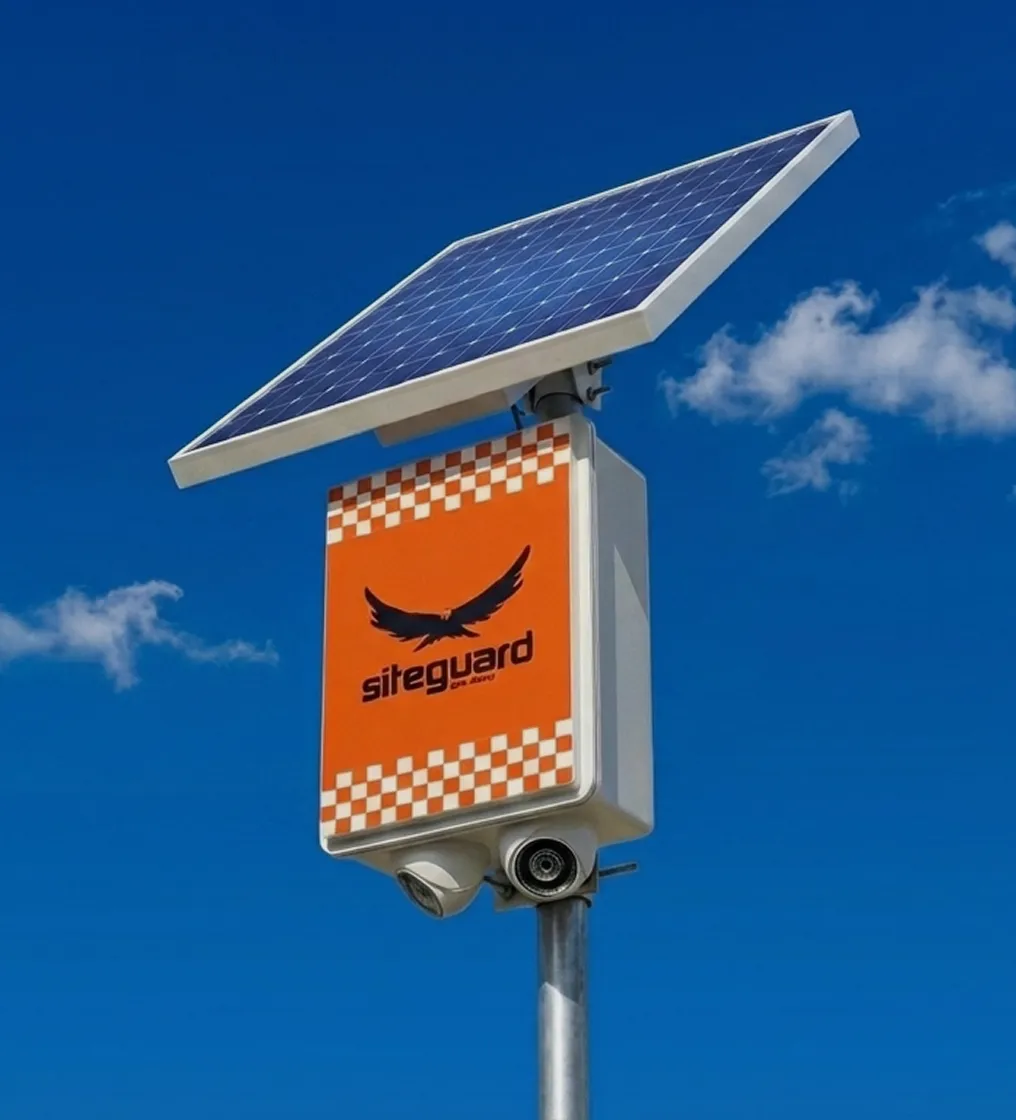
Siteguard doesn't publish hire rates, and format alone won't give you a number. A quote is built from the unit, term, monitoring, connectivity and delivery. Our guide to site security camera hire costs breaks down each line.
Public trailer figures exist, though they date. The AlburyCity report estimated a trailer CCTV system at about $90,000 to $100,000 to buy, or about $20,000 per unit to hire for six months. Treat that as a 2020 reference point, not a price list.
Format moves the cost in quieter ways:
If units will move job to job for years, buying can beat hiring. Our hire or buy cost comparison works through the break-even.
Plenty of sites run both: towers on the fixed perimeter and a trailer following the work front. Not sure? Send Siteguard a rough site plan and the team will recommend the mix.
It depends on how long each position lasts. Towers suit perimeters that hold for weeks or months and tight urban blocks. Trailers suit early works and work fronts that move often.
Yes. A tower moves with plant or a truck rather than being towed. Siteguard's Starlink Tower, for example, has a forklift and lifting hook for transport and installation.
You need a vehicle and towbar rated for the loaded trailer. In NSW, the loaded trailer can't exceed the lowest of the towbar, vehicle, trailer and tyre ratings. Other states set their own rules, so check before you tow.
There's no single rate, because the quote depends on the unit, term, monitoring, connectivity and delivery. A 2020 AlburyCity council report estimated trailer CCTV hire at about $20,000 per unit for six months.
Yes. Siteguard's towers and trailers can run on solar power, with a battery that keeps the cameras recording overnight. Where there's no 3G or 4G, Starlink keeps live view and alerts working.