
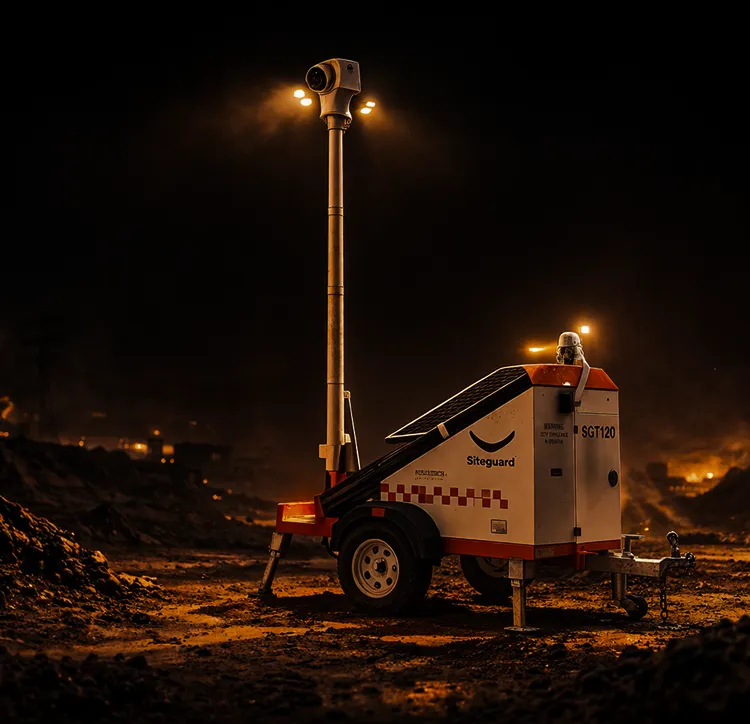
Every truck, ute and delivery van that rolls through your gate should leave a record. ANPR technology makes that record without anyone standing at the gate with a clipboard. A camera captures the plate, software turns the image into text, and the system logs the vehicle with a time, date and photo.
This guide covers how ANPR reads a plate, what makes a read succeed or fail, and how sites, depots and car parks use it for gate control, truck counts and covered-load checks. It also explains what a searchable plate dashboard adds once the camera is up, and points to our deeper articles on each topic.
ANPR technology uses a camera and software to find a vehicle's number plate in an image, read the characters and log them with a time, date and photo. On sites, depots and car parks it automates gate logs, flags unknown vehicles, counts trucks and gives you searchable evidence for audits, disputes and incidents.
ANPR stands for automatic number plate recognition. You'll also see it called LPR (licence plate recognition) or NPR. The names differ, the job is the same: a camera captures a vehicle, software reads the plate, and a database stores the result so you can find it later.
Australians drive past it every week. In NSW, Transport for NSW's average speed cameras photograph each heavy vehicle at the start and end of a road section, record the plate and time at both points, and work out the average speed between them. They've been used on heavy vehicles since 2010. Councils use the same idea for parking: Strathfield Council's mobile plate recognition records each plate with the date, time and location, and the council states it won't be used for general surveillance.
Private ANPR on a site, yard or car park works the same way but answers different questions. Who came in? When did they leave? Should they have been there at all? Nobody gets a fine from your gate camera. You get a record, and on a busy job that record settles arguments. For how public and private use differ, read our article on automatic number plate recognition in NSW.
A plate read takes a fraction of a second, but it's a chain of steps. Each one has to work for the read to land in your log.

For a site manager, the first two steps matter most. The software can't read what the camera didn't capture cleanly. A square-on, well-lit, sharp image of the plate does more for accuracy than any software setting.
The last step is the one you'll use every day. Siteguard's number plate recognition reads and time-stamps every vehicle entering or leaving the site automatically, so the log builds itself while your crew gets on with the job.
Running a build with trucks in and out all day?
See how Siteguard sets up cameras, monitoring and reporting for active construction sites.
Siteguard for constructionAccuracy isn't one number on a spec sheet. It's the result of the conditions at your gate: where the camera sits, how fast vehicles move, how much light there is and what state the plates are in. The same camera can read nearly everything at one gate and struggle at another.
| Factor | What goes wrong | What helps |
|---|---|---|
| Plate angle | A steep side angle squashes the characters | Mount the camera close to in line with the lane |
| Vehicle speed | Motion blur on fast vehicles | Read at a gate or chokepoint where vehicles slow down |
| Light | Darkness, headlight glare, low sun into the lens | Infrared or built-in lighting; avoid facing straight into sunrise or sunset |
| Plate condition | Mud, dust, bent plates, tow bars and bike racks in the way | Keep the entry clean; read the rear plate as well as the front |
| Plate variety | Personalised plates, different state formats, trailer and temporary plates | Test reads on the vehicles that actually use your site |
| Distance | The plate is too small in the frame to read | Position or zoom so the plate fills enough of the image |
| Weather | Rain, dust and spider webs on the lens | Weatherproof housing and a lens check on routine site visits |
The best place to read a plate is where vehicles have no choice but to slow down and line up: the main site gate, a single-lane entry or the weighbridge approach. Two lanes side by side means one truck can hide another's plate. Put the camera where it sees each lane square-on, at a height that clears the bull bar but doesn't look steeply down.
Night reads deserve their own test. A dark site gate with no street lighting is a common setup on regional jobs, and a camera without its own infrared or built-in lighting will miss plates there. Siteguard's unit pairs advanced night vision with built-in lighting for low-light detection. For the full picture on shutter speed, infrared and plate angle after dark, see does number plate recognition work at night.
Test with your own vehicles before you trust the log. Drive the water cart, a tipper with a muddy plate, a trailer and a ute through after dark, then search for each plate the next morning. Whatever it missed tells you what to fix.
The simplest use of ANPR is knowing who's at the gate. You build an allow list of plates that belong on site (your own fleet, regular subcontractors, booked deliveries) and a watch list of plates that don't. Every read is checked against both.
The useful part is the exception. A known plate during work hours is routine. An unknown plate at 2am is the one you want to hear about straight away. Siteguard's system sends an instant alert the moment a vehicle arrives on site, so after-hours arrivals don't wait until Monday to be noticed.
On a permanent depot gate, plate reads are often paired with a boom barrier or gate controller so approved vehicles get through without stopping. On a temporary construction site, where the gate is a fence panel and a chain, the alert matters more than the barrier. Pair the alert with 24/7 control room monitoring and an Australian-based operator verifies the event and can issue audio warnings or escalate to the relevant authorities. Our article on ANPR site access control covers allow lists, alerts and gate hardware in more detail.
Want every plate at your gate read, logged and searchable?
Siteguard's solar-powered ANPR unit captures every vehicle in and out, day or night, with instant alerts and a searchable vehicle database.
See Siteguard ANPRMost sites still run a paper gate log, and most of those logs have gaps. The 6am concrete rush doesn't wait for anyone to write down plates. Handwriting is guesswork by lunchtime. Nobody logs the vehicle that came in at midnight, which is the one you most want on record.
A camera log fixes the gaps because it doesn't depend on someone remembering. Every vehicle is time-stamped going in and out, so you can link plates to deliveries and subcontractors, see which trades were on site on a given day, and spot a vehicle nobody recognises. Our article on number plate recognition on construction sites walks through a typical gate setup, and keeping a construction site gate log covers what the log needs to record.
Truck counts are where the log pays for itself. Bulk earthworks, spoil removal and quarry deliveries are billed by the load, and a camera count gives you something to reconcile against dockets and invoices. If a haulage invoice says 64 loads and the log says 51, you have a conversation backed by records. See how to count trucks entering a construction site for manual tallies versus camera logs, and Siteguard's Vehicle Log (truck counting) service for the setup.
Vehicle records also sit alongside the rest of your site protection. For fencing, lighting, cameras and monitoring together, read our guide on how to secure a construction site.
Logistics yards are high-traffic and hard to watch. Vehicles move all day, there are often several entry points, and losses of cargo and fuel often involve people who have legitimate site access. A guard at one gate can't see the others.
ANPR at each entry and exit gives you two time-stamps per vehicle, and the gap between them is dwell time. That shows which trucks sit in the yard for hours, which carriers turn around fast and whether a vehicle came back after hours. Match plates to bookings and you can see which trucks arrived without one. When a carrier disputes a detention charge, the log shows when they actually arrived and left.
Siteguard's recommended setup for logistics yards and depots pairs an ANPR camera with Starlink connectivity, Siteguard Foreman and control room monitoring, with multi-site control from one dashboard. For yard-specific advice on entry logs, dwell times and booking matches, see yard ANPR cameras for depots and truck yards. Government and civil depots are covered in our guide to infrastructure project site security.
Car parks were one of the first places plate reading caught on, and the uses carry over to private lots. A staff or permit car park can check each plate against a list. A visitor lot can log arrival and departure times to spot overstays. A site compound can see whose vehicles are parked where they shouldn't be.
The after-hours view is often the most useful. A vehicle that enters a closed car park at night, or one that has sat untouched for a week, is worth a look. Events and sporting grounds use the same logs to manage contractor and exhibitor parking during bump-in and bump-out, when gates are busy and lists change daily.
Shared lots raise one extra question: whose data is it? If several businesses use one car park, agree up front who owns the log, who can search it and how long it's kept. That ties into the privacy section below.
An uncovered tipper leaving a site drops dirt, rubble and dust on the road, and the complaints land on the head contractor. NSW councils are clear that loads must be covered. Wollondilly Shire Council, for example, tells drivers they're responsible for their loads, that loads must be covered to contain all material, and that heavy penalties apply in NSW. On construction jobs, councils also commonly write load and road-cleanliness requirements into the conditions of consent.
The problem is proof. If a neighbour reports a dirty road or an inspector turns up, you need to show which trucks left covered and which didn't. A camera at the exit captures each truck as it leaves, tied to its plate and time. That gives you a record that the load was covered at the gate, a way to find the one carrier that keeps skipping the tarp, and something concrete to raise at the next subcontractor meeting.
A plate view and a load view aren't the same shot. Reading a plate needs a low, square-on angle. Checking a tarp needs a higher view of the tray. Ask about a Custom tower, which lets you mix and match cameras on the one tower. Siteguard's Load Monitoring (covered loads) service is built for this check. For the rules themselves, read council requirements for covered loads on construction sites and covered loads and the NSW EPA.
Hours of footage aren't much use if finding one truck means scrubbing through a week of video. The value of ANPR is that every read becomes a searchable record. With Siteguard's searchable vehicle database, you can find any plate, date or time in seconds for audits, disputes and evidence.
Think about the questions that come up on a real job:
Each one is a search, not a morning in the site office. The records sit inside Siteguard Foreman, which gives you live view, camera controls, alerts, schedules and AI reports from your browser. AI Reporting adds event summaries sorted by type, time and activity, plus anomaly alerts that leave a clear audit trail.
Good records hold up when it counts. As Dave, Manager at Canberra Temporary Fencing & Security, puts it: "The NPR systems from Siteguard are pro-level for when you want to get maximum prosecution evidence. The only proper number plate recognition system in my opinion." For what a plate database stores and how to control who sees it, read searchable number plate databases.
A plate on its own is a string of characters. Linked to a name, a company or a work roster, it can become personal information. That's worth thinking through before the camera goes up, not after someone asks.
The Office of the Australian Information Commissioner explains that the Privacy Act covers Australian Government agencies, organisations with an annual turnover over $3 million and some other organisations. Covered organisations must tell people their image may be captured before it's recorded, keep the information secure, and destroy or de-identify it when it's no longer needed. State and territory surveillance laws apply on top of that, and some states have specific workplace surveillance rules with notice requirements for workers.
Rules differ between states, so check the ones that apply where your site is. In practice, most operators do a few things regardless:
This is general information, not legal advice. If you're unsure how the rules apply to your site, get advice for your state.
Here's the catch with most plate reading setups: they assume power and a network cable at the gate. Construction sites, quarries, rural depots and temporary car parks rarely have either. Trenching power to a gate that will move three times during a build is money spent on the wrong thing.
Siteguard's number plate recognition is solar-powered and weatherproof, running off-grid with no cabling or mains power. It's mounted on highly visible towers, which adds a visible deterrent to the gate as well as a record. Pair it with Siteguard's solar camera towers and the gate and the perimeter are covered on the same site.
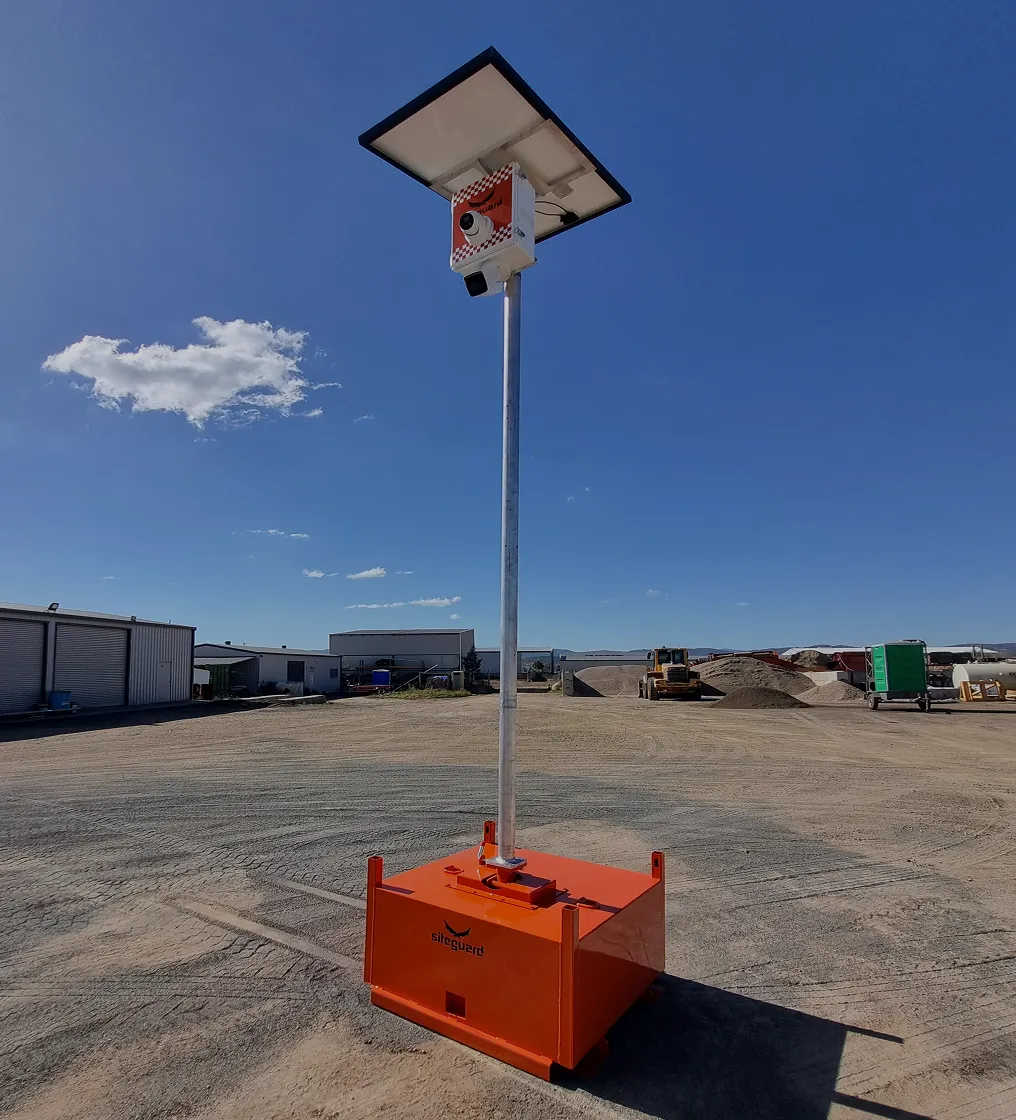
Connectivity is the other half. Where mobile coverage is patchy, Starlink connectivity reaches remote sites where 3G and 4G don't, supporting live video, remote camera access and real-time alerts. That matters on mining sites, where operations need controlled site access and detailed activity logs. For the wider picture on sites with no power, internet or people, read our guide to remote site security.
A good quote starts with good information about the site. Work through these before you call anyone:
Siteguard offers both hire and purchase. Tell the team about your site, industry and budget and they'll recommend the right setup.
ANPR technology reads and logs vehicle number plates automatically. Businesses use it to control site and depot access, keep gate logs, count trucks, track dwell time in yards, manage car parks and keep searchable evidence for audits, disputes and incidents.
Accuracy depends on the conditions at the camera rather than one fixed figure. A square-on view, vehicles slowing at a gate, good lighting and clean plates give the best results. Steep angles, motion blur, glare and muddy plates are the most common causes of missed reads.
Yes, if the camera has its own infrared or built-in lighting. Siteguard's unit uses advanced night vision with built-in lighting, so it can read plates at a dark site gate without relying on street lights or headlights.
Businesses use ANPR on private sites across Australia, but obligations vary. The Privacy Act may apply depending on the organisation, and state and territory surveillance laws also apply. Clear signage, limited access to the data and a set retention period are common practice. Check the rules for your state.
Yes. Siteguard's number plate recognition is solar-powered and weatherproof, with no cabling or mains power required. Where mobile coverage is poor, Starlink connectivity keeps live view and alerts working on remote sites.
There is no practical difference. ANPR (automatic number plate recognition) is the common term in Australia and the UK, while LPR (licence plate recognition) is more common in North America. Both describe cameras and software that read and log vehicle plates.