

Drive across NSW for a day and your plate will likely be read more than once. Automatic number plate recognition in NSW runs on highways, in commuter car parks, in council parking patrols and at the gates of private sites, yards and depots. Most drivers never notice it.
Here's where ANPR runs in NSW, what the public sees, and how a private ANPR camera on a site gate differs from the systems on the road.
Automatic number plate recognition in NSW is used by Transport for NSW for average speed cameras, by commuter car parks for ticketless entry, by councils for parking patrols, and by businesses at site and depot gates. Government systems read plates to enforce road and parking rules. Private ANPR reads plates to log vehicles, control access and keep searchable records.
The technology is the same everywhere: a camera captures the vehicle, software reads the plate, and the read is stored with a time and place. What changes is who runs the camera and what happens after the read.
| Setting | Who runs it | What the plate read is for |
|---|---|---|
| Highways | Transport for NSW | Average speed enforcement |
| Commuter car parks | Transport for NSW | Ticketless entry and free parking checks |
| Street and council parking | Local councils | Timed parking patrols |
| Sites, yards and depots | The business that owns the site | Gate logs, access control, evidence |
The best-known example is the average speed camera. Transport for NSW photographs each vehicle at the start and end of an enforcement length, records the plate and the exact time at both points, and works out the average speed from the travel time. Heavy vehicles have been enforced this way since 2010.
Cars, utes and motorbikes are now in the picture too, at two regional sites: the Pacific Highway between Kew and Lake Innes, and the Hume Highway between Coolac and Gundagai. Enforcement for light vehicles started on 1 July 2025, and Transport for NSW says only the minimum data needed to detect and enforce offences is kept.
Running a depot or truck yard in NSW?
See how Siteguard tracks every vehicle, load and entry point across busy logistics yards.
Siteguard for logisticsAt Park&Ride car parks, the Park&Ride terms say cameras scan the plate on entry and record the time. If the plate is linked to an account and the driver made an eligible trip, the gate opens on exit with up to 18 hours free. The camera doesn't capture or store images of the people inside.
Councils use it on the street. Strathfield Council runs mobile plate recognition that records each plate with the date, time and location, and states it won't be used for general surveillance.
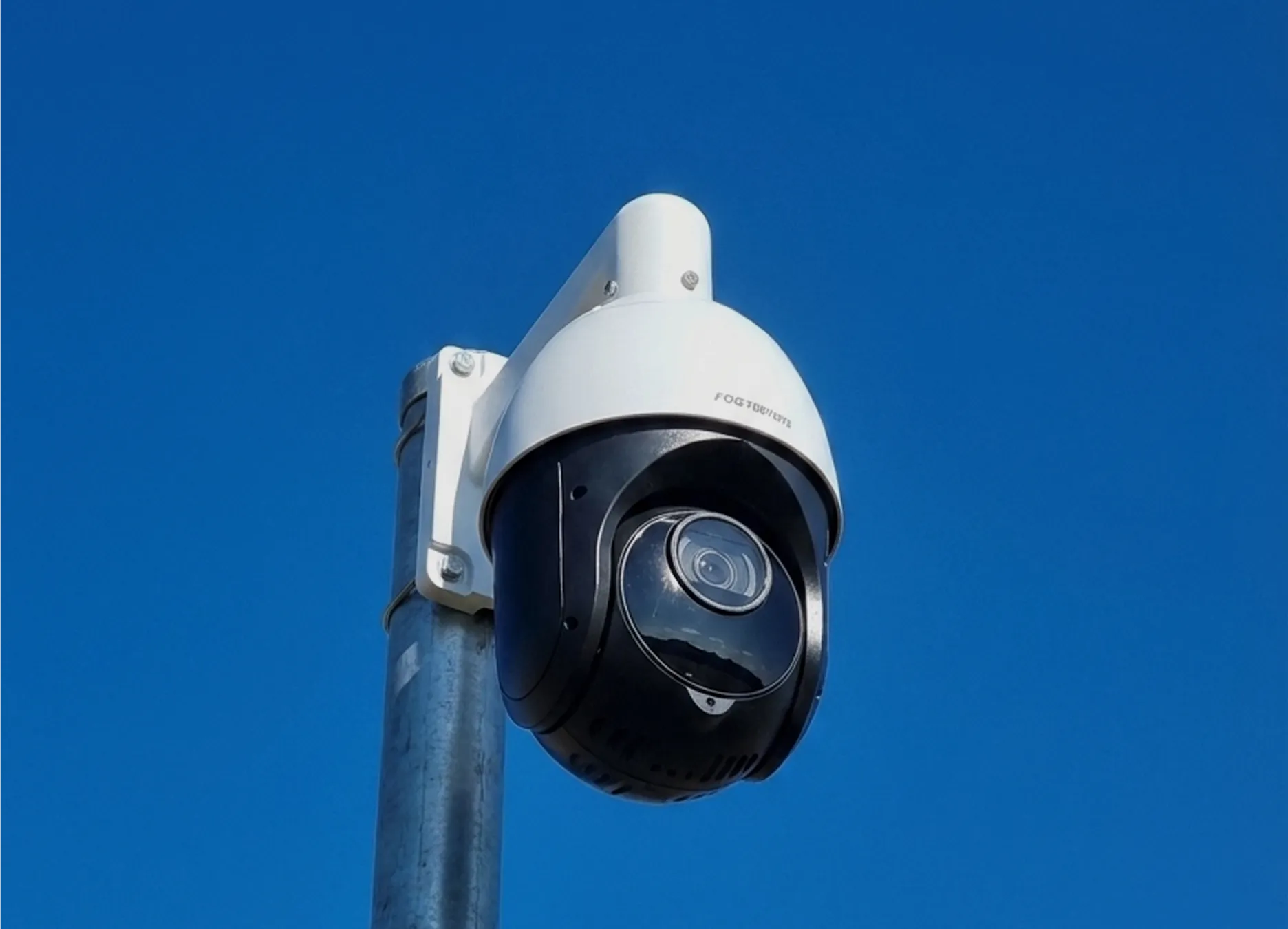
On the road you see a pole or a gantry. You don't see the read or the database check. The result turns up later as a letter, a fine or a gate that opens on its own.
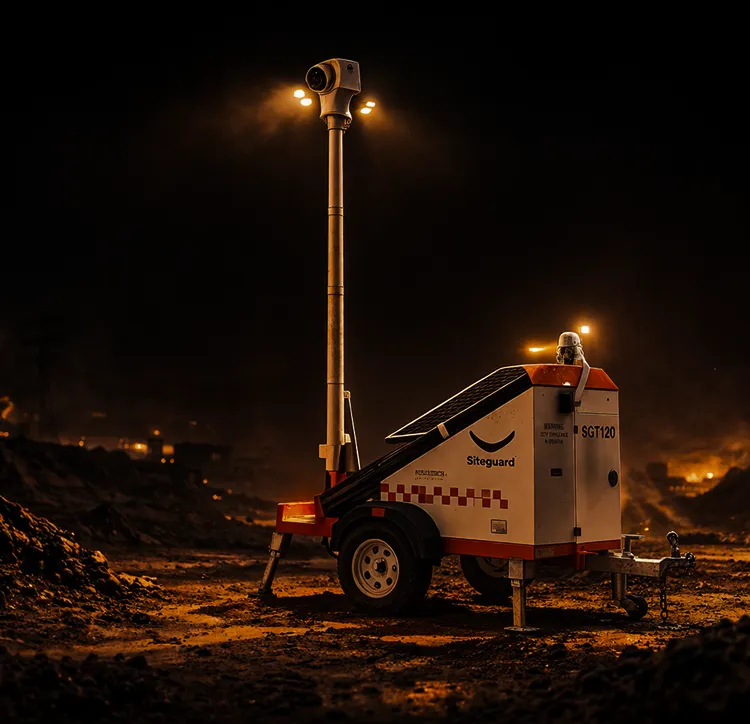
A private site gate is more visible by design. Siteguard mounts its number plate recognition on highly visible towers, so anyone pulling up sees the camera. That's deliberate: a camera at the gate is a deterrent before it's a record.
Want every plate at your gate read and logged?
Siteguard's solar-powered ANPR unit captures every vehicle in and out, day or night, with instant alerts and a searchable vehicle database.
See Siteguard ANPRNobody gets a speeding fine from your gate camera. Private ANPR answers site questions: who came in, when they left, and whether they should have been there. Same camera, different purpose and outcome.
| Government ANPR | Private ANPR | |
|---|---|---|
| Purpose | Enforce road and parking rules | Log vehicles, control access, keep evidence |
| Outcome of a read | A fine, a notice or free parking | A time-stamped record and, if needed, an alert |
| Who acts | The agency or council | The site team or a monitoring operator |
| Setup | Fixed gantries, poles or patrol cars | Often a mobile tower that moves with the job |
The practical difference shows after hours. A known plate at 7am is routine. An unknown plate at 2am is the one you need to hear about, and with 24/7 control room monitoring an Australian-based operator verifies the event and can issue audio warnings or escalate to the authorities.
A plate linked to a person or a company can be personal information. The OAIC explains that the Privacy Act covers organisations with an annual turnover over $3 million, among others, and those organisations must tell people their image may be captured, keep it secure and destroy or de-identify it when no longer needed.
Workers are covered separately. Under NSW's Workplace Surveillance Act, the NSW Government's summary says employees generally need written notice at least 14 days before surveillance starts, and cameras should be clearly visible with signs. If the camera reads your own staff's vehicles, factor that in. This is general information, not legal advice.
Plenty of NSW gates have no mains power, especially on regional jobs. Siteguard's number plate recognition is solar-powered and weatherproof, with no cabling or mains power required, and pairs advanced night vision with built-in lighting for dark gates. The searchable vehicle database finds any plate, date or time in seconds through Siteguard Foreman.
Siteguard has a NSW dealer and installer covering metro and regional areas, from Sydney to the Central West. For how plate reading works step by step, read our guide to ANPR technology, and for gate setups and allow lists, see ANPR site access control.
Yes. Transport for NSW uses it in average speed cameras and at Park&Ride car parks. Some councils use it for parking patrols, and many businesses use it at site and depot gates.
At two sites, yes: the Pacific Highway between Kew and Lake Innes and the Hume Highway between Coolac and Gundagai, since 1 July 2025. Elsewhere they enforce heavy vehicles.
Businesses use ANPR on private sites in NSW, but obligations depend on the organisation and who is recorded. The Privacy Act may apply, and the Workplace Surveillance Act sets notice rules for employees. Clear signage is common practice.
Government ANPR enforces road and parking rules. Private ANPR logs vehicles at a site, controls access and keeps searchable records for disputes and incidents.
Yes. Siteguard's number plate recognition is solar-powered and weatherproof, with no cabling or mains power required.