

SafeWork NSW calls the Christmas and New Year break the longest shutdown in the construction industry, and its inspectors don't wait until January to look at your site. They visit through December and keep checking during the break. Securing a construction site before Christmas is now a compliance job as much as a theft job, and the people you most need to keep out are often kids on school holidays.
Here's what inspectors check, what the principal contractor owns, and what to record before you chain the gate. For theft, see our guide to securing your site over the Christmas shutdown.
Before the Christmas shutdown, WHS inspectors check that your site is secured against unauthorised access: fencing that holds, locked gates, signage with an after-hours number, power switched off, scaffolding and upper floors blocked, plant secured and voids covered. Securing a construction site before Christmas is the principal contractor's duty. Photograph each step before you leave, and plan who responds if someone gets in.
In December 2025, SafeWork NSW said its inspectors would visit worksites across the state through December and January, including during the shutdown, to check businesses had met their legal obligations before going on holiday. Its list is short, and it's the one an inspector walks round your site boundary with.
| What they check | What a pass looks like |
|---|---|
| Boundary fencing | Adequate and secured, with no gaps at gates or shared boundaries |
| Signage | Visible from outside, with the principal contractor's after-hours contact number |
| Site power | Switched off |
| Housekeeping | Site tidy and clear of debris |
| Heights | Access to upper floors, scaffolding and ladders blocked |
| Plant and materials | Plant, equipment, tools, chemicals and dangerous goods secured |
| Ground hazards | Voids, pits, trenches and pier holes covered, water drums emptied, reo bars capped |
Find a site unsecured over the break and SafeWork NSW will contact the principal contractor to secure it. Answer that call with keys and a person ready to go.
Under the model WHS laws, the person with management or control of a construction workplace must ensure, so far as is reasonably practicable, that it is secured from unauthorised access. On a construction project, that's the principal contractor. WorkSafe Queensland's guidance says the risk assessment weighs the risks to someone who gets in, how likely entry is, and how to isolate hazards where entry can't be prevented.
Likelihood is where Christmas changes the answer. Queensland names closeness to places frequented by children, such as schools, parks and shopping precincts. A fence that's enough on a working Tuesday may not be when the street is full of kids on bikes for the summer holidays.
Signage counts too. WorkSafe Tasmania says the principal contractor's sign must be visible from outside and show their name, phone numbers including an after-hours number, and the site office location. Victoria runs its own OHS laws and penalties differ by state, so check with your regulator. This is general information, not legal advice.
Want the lock-up walk on one page?
The Christmas Shutdown Checklist runs from four weeks out to your first day back, with the inspector's list as tick boxes your supervisor can carry round the fence.
Download the checklistThieves come for cable and tools. Kids come because a half-built house with scaffolding is the best playground in the suburb. SafeWork NSW has warned that unsecured sites are a risk to the public, particularly children on school holidays, after a 16-year-old boy fell 10 metres while trespassing on a Mosman construction site.
WorkSafe ACT notes that people who don't know a site may not recognise its risks, even where hazards are signposted. In 2024–25, workplace security was the most common subject of improvement notices under the ACT's WHS Regulation, at 11 per cent.
Walk lock-up day like a 12-year-old would. What can you climb, and what looks fun?
A fence is the first control an inspector looks for, and a camera doesn't replace it. A monitored camera does what a fence can't: notice someone has climbed it, and act before they reach the scaffold. It's part of Siteguard's setup for construction sites.
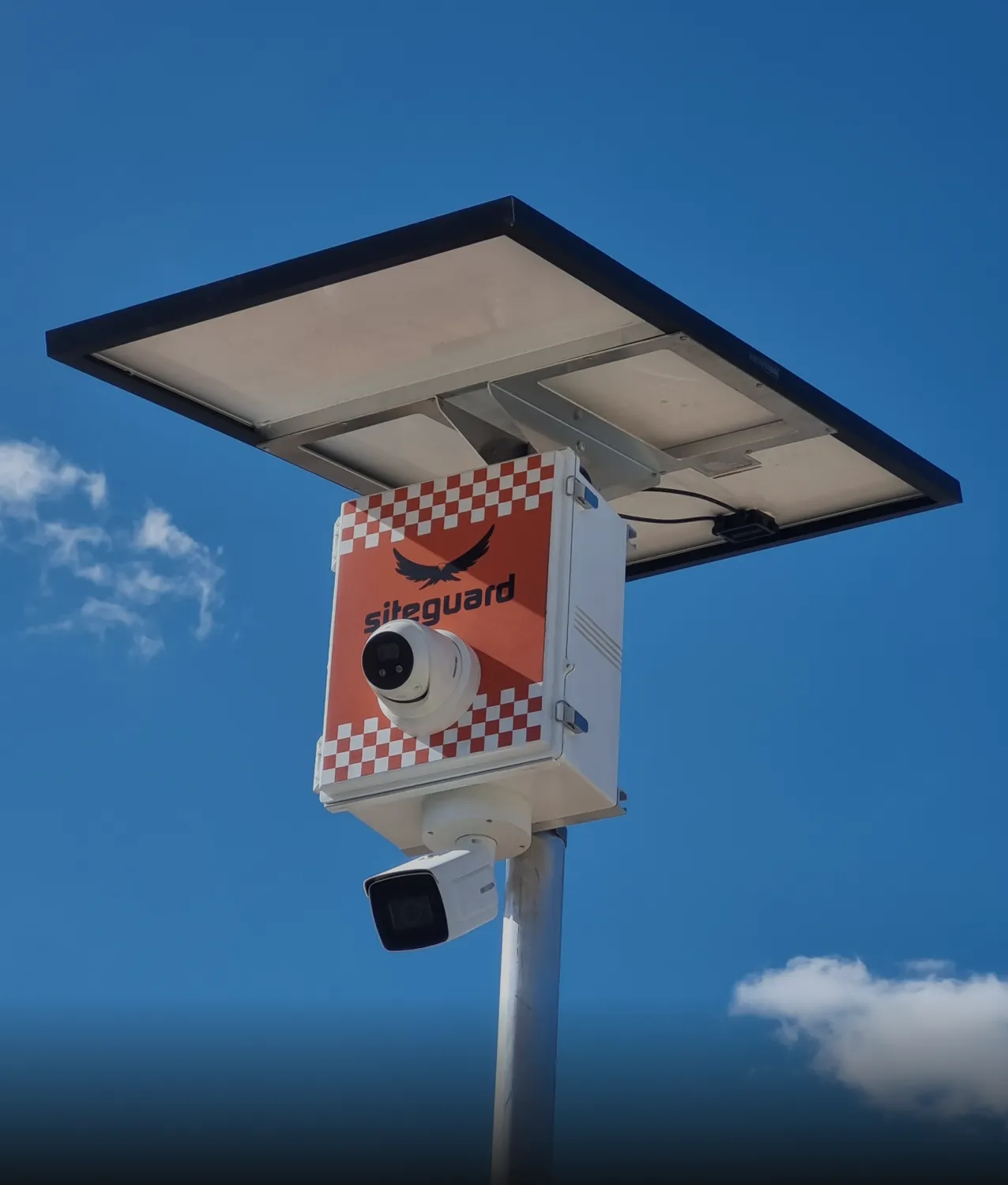
Siteguard's solar camera towers come in four configurations. A Single Cam covers one gate or container at 4K 8MP with a 95° field of view and intruder alerts. A Twin Cam gives 180° coverage with smart alerts, siren and strobe, and battery backup. The Pan & Zoom 360° Cam handles open ground with up to 1km zoom and low-light performance.
There's a WHS reason to go solar. Switching off site power is on the inspector's list, and it takes wired lighting and mains cameras with it. Solar towers keep running.
With control room monitoring, an Australian-based operator verifies every alarm, issues audio warnings and sirens, and escalates to the authorities when required. It runs 24/7, public holidays included. For a kid who has just climbed your fence, a voice from the tower is a reason to climb back out.
Someone has to answer the alarm on Boxing Day
Siteguard's operators verify each alarm, issue audio warnings and escalate when required, right through the break.
See control room monitoringAfter an incident, an inspector, an insurer and the police all ask what the site looked like when you left. Build that answer on lock-up day. Our last-day lock-up walk covers the route; this is the record to keep.
Cameras keep the record going. Siteguard Foreman gives you live view, alerts and AI reports from a browser, so you can check the site without driving out.
Take the lock-up photos in one walk, boundary first, and save them to the project folder before you leave. The timestamps do the rest.
In NSW, a business that hasn't secured its site can get an improvement notice, a prohibition notice, or an on-the-spot fine of $2,700, and individuals can be fined $500. The principal contractor also gets the call to come and fix it, mid-break.
The fine is the small cost. The big one is a child injured on your site. A fence that holds, hazards dealt with and someone watching who can act is what an inspector, and a parent, expects.
In NSW: boundary fencing, signage with an after-hours number, site power, housekeeping, blocked access to scaffolding and upper floors, secured plant and chemicals, covered voids and trenches, empty water drums and capped reo. Inspectors also visit during the shutdown.
The principal contractor, as the person with management or control of the workplace. They must secure the site from unauthorised access so far as is reasonably practicable. Duties vary by state, so check with your regulator.
Yes. In NSW, SafeWork can issue an improvement or prohibition notice, or an on-the-spot fine of $2,700 for a business and $500 for an individual. Penalties differ between states and territories. This is general information, not legal advice.
Fence the whole boundary with clamped panels, lock the gates, block scaffolding and upper floors, and cover pits and trenches. Then add a response: a monitored camera tower can issue an audio warning when someone gets past the fence.
They support it but don't replace fencing, locked gates and isolated hazards, which inspectors look for first. Monitored cameras add detection, a response and a dated record of the break.