
Ask ten builders what theft costs them and you'll get ten different answers, most of them sworn rather than measured. The published construction site theft Australia statistics are thinner than the industry chatter suggests, but the figures that do exist point one way: tools, materials, fuel and copper keep disappearing, and the bill lands on the builder.
This article pulls together the numbers you can actually check, explains what pushes them up, and shows how to turn them into a site security budget that holds up when the PM or the client asks why.
There is no single national count, because police record construction site theft inside broader theft categories. The published construction site theft Australia statistics that do exist show Victorian tradies lost about $33 million in stolen tools in a year, and a theft category that includes building sites rose 28 per cent in Ballarat in the year to June 2026. The real cost runs higher once delays, damage and insurance excess are added.
Start with the gap. No state police force publishes a clean "construction site theft" line. Thefts from building sites are recorded inside general theft or "other theft" categories, so anyone quoting a precise national total is estimating. Treat round national numbers without a named source with suspicion.
What you can check comes mostly from Victoria's Crime Statistics Agency, which publishes the value of stolen property by item type. In June 2024, ABC Radio Melbourne reported that about $33 million worth of tools was stolen from Victorian tradespeople in the previous year, a 12 per cent rise. More recent data, released in September 2026 and reported by The Courier, put tool and building material losses in the Ballarat area alone at more than $1.2 million for the 12 months to June 2026.
| Figure | Where and when | Source |
|---|---|---|
| About $33 million in tools stolen from tradies, up 12% | Victoria, year before June 2024 | Crime Statistics Agency, via ABC |
| More than $1.2 million in tools and building materials stolen | Ballarat area, 12 months to June 2026 | Crime Statistics Agency, via The Courier |
| "Other theft" offences, which include building site thefts, up 28% to 1,609 | Ballarat LGA, 12 months to June 2026 | Crime Statistics Agency, via The Courier |
| About $4.5 million a year lost to copper theft | Queensland electricity network | Energex and Ergon, via ABC |
| "Millions of dollars" in tools, equipment and materials every year | Australia-wide estimate | Housing Industry Association |
The Housing Industry Association lists the usual targets on residential jobs: windows, timber, white goods, hot water units, copper wiring and major appliances. That's fit-out stock, worth most in the final weeks of a build.
Civil sites lose different things. When WA Police signed the PACT reporting agreement with industry bodies, the Civil Contractors Federation WA named fuel, plant, machinery, copper pipe and cable as the common targets.
Copper deserves its own mention. Energex and Ergon told the ABC that copper theft costs Queensland's network about $4.5 million a year, and new housing estates and developments were among the places being hit.
Running a build with gear left on site overnight?
See the setup Siteguard recommends for construction sites, from Twin Cam towers to timelapse records.
Siteguard for constructionThe police figure only counts what walked off site. Your loss includes what it took to get back on program. The CCF WA put it bluntly in that PACT release: thieves will do thousands of dollars' worth of damage to steal a few hundred dollars of diesel. Cut fences, smashed containers and drained machinery all cost more than the fuel.
Then there's time. HIA points out that delays follow when stolen supplies can't be replaced quickly. A missing hot water unit can hold up a handover. A stolen excavator can stall a crew for days while you hire a replacement.
Add the insurance excess, the admin of a claim, and the arguments that drag on when there's no footage of what happened. Without evidence, insurance claims and contractor disputes get slow and expensive.
The same few conditions show up behind most of these numbers:
Before the 2025 Christmas break, SafeWork NSW called it the longest shutdown in construction and warned of on-the-spot fines of $2,700 for businesses with unsecured sites. Rules differ between states, so check what applies where your site is.
The risk climbs when your crew goes home
Siteguard's Australian-based control room verifies every alarm and responds in real time, nights, weekends and public holidays.
How monitoring worksPublished statistics tell you theft is common and rising in places. They can't tell you what your next job will lose. For that, use your own loss history. Pull the last two or three projects and add up stolen items, repairs, hire replacements, excess paid and days lost.
Then set the risk window. A slab-and-frame stage with little on site carries less exposure than lock-up and fit-out, when appliances and copper arrive. The Christmas shutdown is its own line item.
Compare that exposure with the cost of protection over the same window, not per year. One Siteguard client put the result plainly:
"Last Christmas we had 21 break-ins into our construction site. We installed a Siteguard system on site and this Christmas we only had 1 attempted break-in. It has even saved us the cost of paying for security guards." Kevin, Senior PM, Hines Constructions Pty Ltd
If you'd rather not buy hardware for a short risk window, site security camera hire lets you cover the high-risk stages and send the units back afterwards.
Spend where your losses come from. A fence and a padlock slow people down. Cameras with alerts and a deterrent give you a chance to stop the theft and a record if it happens anyway.
| Main risk | What helps | Siteguard option |
|---|---|---|
| After-hours break-ins on an open perimeter | Wide coverage, siren and strobe, live alerts | Solar camera towers (Twin Cam covers 180°) |
| Vehicles entering to load stolen gear | Plate capture and a searchable log | Number plate recognition |
| Short jobs, early works and temporary compounds | Security that moves with the site | Surveillance trailers |
| Disputes and insurance claims | Footage and event records you can find fast | AI Reporting event summaries |
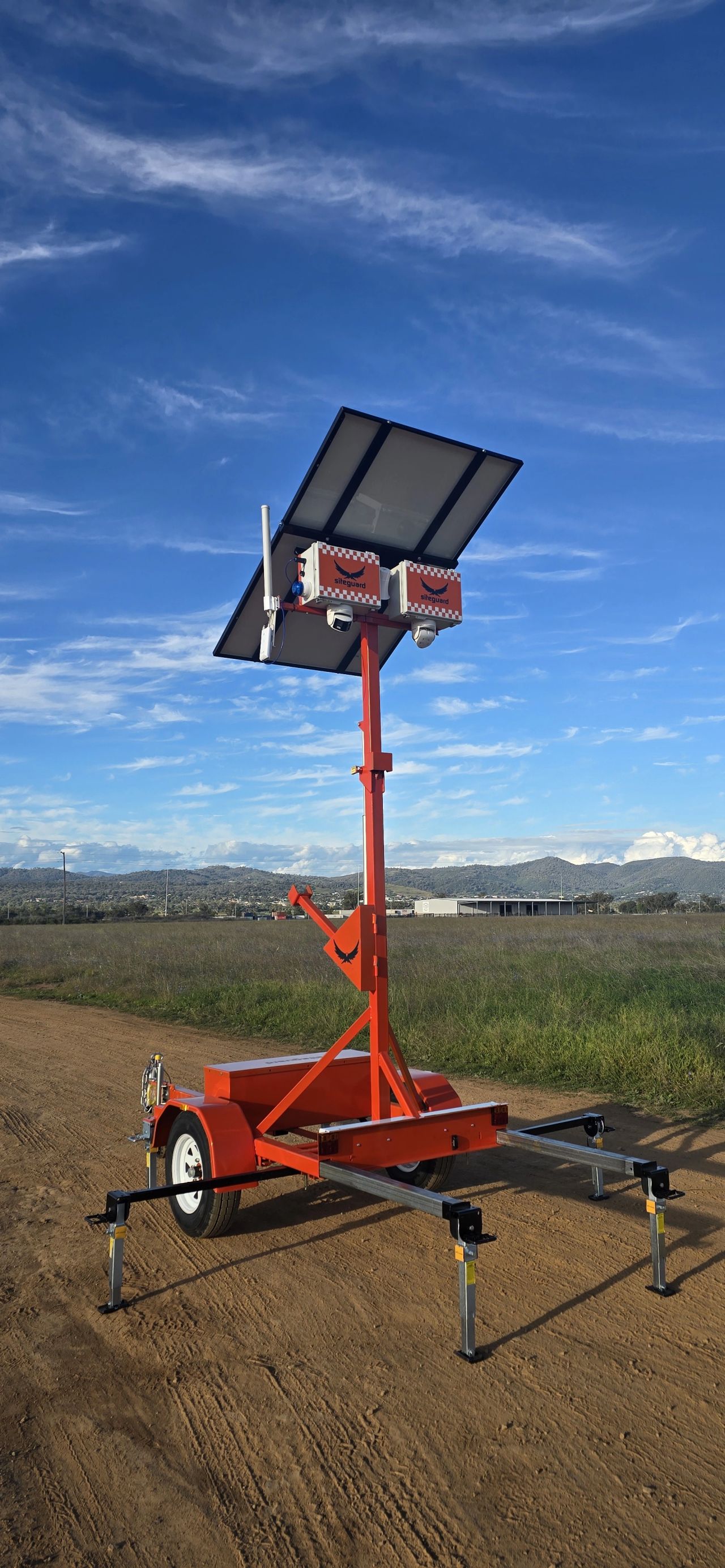
On remote jobs with no mains power, solar units with battery backup avoid the cost of running power to a camera. A small setup can cover a single entry point, while a Pan & Zoom 360° Cam with up to 1km zoom suits large multi-stage sites.
There is no official national figure, because police record building site theft within broader theft categories. Victorian Crime Statistics Agency data showed about $33 million in tools stolen from tradespeople in one year, and the Housing Industry Association estimates millions of dollars in tools, equipment and materials are stolen every year.
Power tools, timber, windows, white goods, hot water units and copper wiring are common targets on residential builds. Civil and infrastructure sites lose fuel, plant, machinery, copper pipe and cable.
The risk is highest when nobody is on site: overnight, on weekends and over long breaks. The Christmas and New Year shutdown is the longest unattended period of the year for most builders.
In NSW, SafeWork NSW inspects sites during the shutdown and can issue on-the-spot fines of $2,700 to businesses with unsecured sites. Requirements differ between states and territories, so check the rules where your site is.
There is no standard figure. Add up what theft, damage, delays and insurance excess cost you on recent jobs, then compare that with the cost of security over the riskiest stages of the build, such as lock-up, fit-out and the Christmas shutdown.