
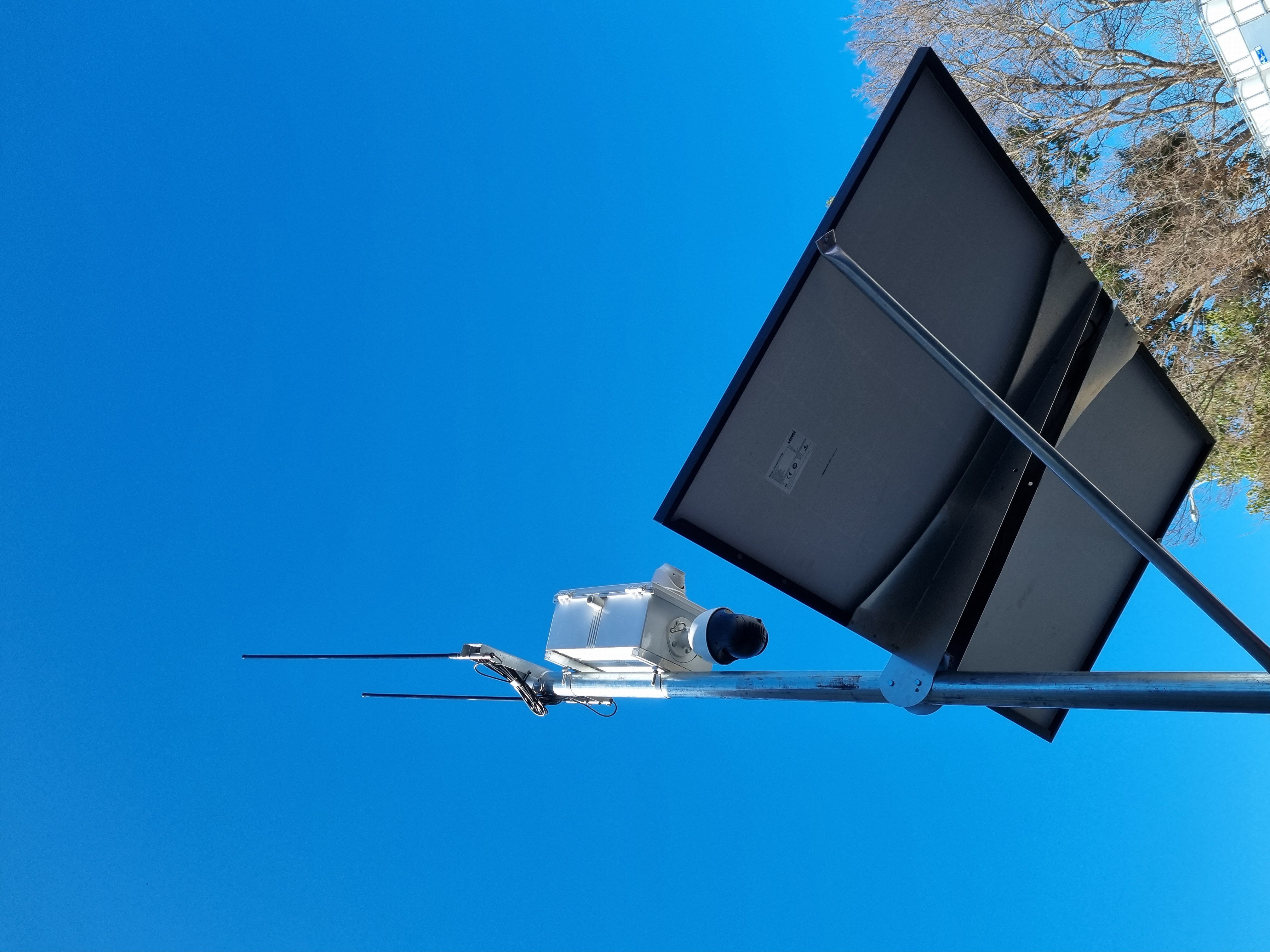
A remote civil job breaks most security plans on day one. There's no mains power to plug into, the nearest mobile tower is somewhere over the range, and the work front keeps moving down the alignment. Picking the top construction cameras for remote civil sites comes down to matching the setup to the job, not buying the biggest camera on the list.
Below, Siteguard's solar towers, Starlink towers, trailers and number plate recognition are compared by job type, so you can build a camera plan before you ask for a quote.
The top construction cameras for remote civil sites are solar-powered units chosen by job type: a Pan & Zoom 360° tower for wide earthworks, a Starlink tower or solar trailer for corridor jobs beyond mobile coverage, number plate recognition on haul road gates, and a Twin Cam over the plant compound. Add control room monitoring so someone acts on every after-hours alert.
Three things go missing once a civil job heads out of town: power, signal and people. Early works rarely have cabled power, so traditional CCTV can't go in. The signal gap is real too. In a February 2025 piece from the federal Communications Minister, more than 70% of the continent is described as having no mobile connectivity.
Then there's the layout. A civil site can run for kilometres, with multiple access points and a footprint that changes every few weeks. Siteguard's civil and infrastructure surveillance page lists the same pressures, including equipment and fuel theft in unattended areas. A camera that can't move, or can't send an alert, solves none of them.
Every unit below runs on solar power, so the real choices are coverage, connectivity and how often it moves.
| Setup | Best job type | What it brings |
|---|---|---|
| Twin Cam tower | Plant compound, laydown, site office | 180° FOV, smart alerts, siren and strobe, battery backup |
| Pan & Zoom 360° Cam tower | Bulk earthworks, stockpiles, open ground | 360° PTZ, zoom up to 1km, low-light, remote control |
| Custom tower | Large compounds with no room for blind spots | Mix and match cameras, such as 2x 360° PTZ with 1km zoom |
| Starlink Tower | Roads, pipelines, rail and utility jobs with no 3G or 4G | Satellite connectivity, multi-camera, wind rated, vandal-resistant base |
| Solar CCTV trailer | Moving work fronts, early works, temporary compounds | Road-certified, GPS, UHF radio, 3G/4G, optional Starlink |
| Number Plate Recognition | Haul road gates, compound entries | Logs every plate, searchable database, night vision, instant alerts |
| Ghost Cam | Fuel and plant stored in the dark | Low-light imaging, thermal detection option, covert housing |
Most remote civil jobs run two or three of these in combination.
Compare the solar tower range
Single Cam, Twin Cam, Pan & Zoom 360° and Custom towers side by side, available to hire or purchase and backed by a 24/7 control room.
See the tower range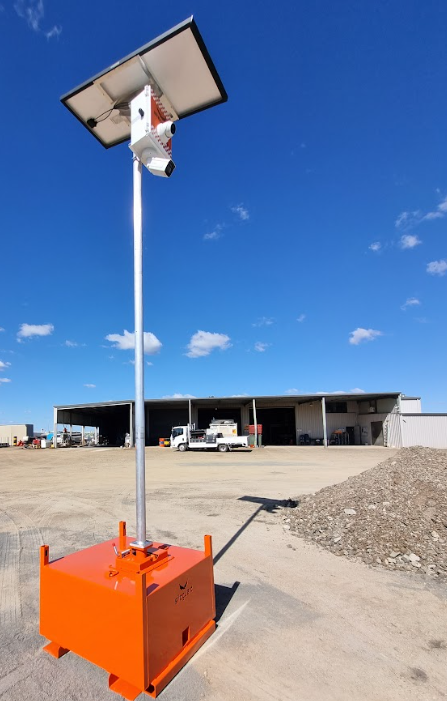
On a subdivision or bulk earthworks package, the problem is distance. Plant parks at the cut, stockpiles sit hundreds of metres away, and nobody can light all of it. Range beats camera count here. Siteguard's Pan & Zoom 360° Cam gives 360° PTZ control with zoom up to 1km and low-light performance, so one tower on high ground watches a long view.
Where one PTZ isn't enough, a Custom tower carries two 360° PTZ cameras on the one mast for no blind spots across a big compound. Put a Twin Cam with siren, strobe and battery backup over the plant yard. Siteguard's solar camera towers relocate as cut becomes fill. For placement by zone, see civil construction site security cameras.
Linear jobs are where sites get properly remote. A road, pipeline or rail job can stretch past the last bar of 4G, and the work front shifts week by week. You need connectivity that doesn't depend on a phone tower, and units that relocate without an electrician.
The Siteguard Starlink Tower is built for this. It pairs Siteguard cameras with satellite connectivity for sites without 3G or 4G, and Siteguard lists remote roads, pipelines, rail and utility projects among its uses. It's heavy-duty steel, fully engineered and wind rated, with a vandal-resistant base and a forklift and lifting hook.
When the crew moves every week or two, a trailer is easier. Siteguard's solar CCTV trailers are road-certified and self-contained, with GPS, UHF radio, 3G/4G and options for Starlink and custom camera setups. Tow, raise the mast, done. Our guide to roadworks CCTV cameras covers plant parked beside live traffic.
Check signal at every work front, not just the compound. If the far end of the corridor drops out, spec Starlink for the units headed there.
No power and no signal on your job?
See how the Siteguard Starlink Tower keeps cameras connected on remote roads, pipelines, rail and utility projects with no 3G or 4G coverage.
See Starlink systemsRemote civil sites rarely have one way in. Haul roads and farm tracks all lead onto the job, and a ute at 2am looks like a 7am delivery until someone checks. Siteguard's number plate recognition cameras read and time-stamp every vehicle entering or leaving, and keep a searchable vehicle database you can check by plate, date or time.
They're solar-powered, with night vision and instant alerts when a vehicle arrives. That's access control by day and evidence after an incident. One security hire manager put it plainly:
"The NPR systems from Siteguard are pro-level for when you want to get maximum prosecution evidence. The only proper number plate recognition system in my opinion." Dave, Manager, Canberra Temporary Fencing & Security
A recording only helps after the fact, and on a remote site nobody's down the road to check. Siteguard's control room monitoring puts an Australian-based team on every alarm: operators verify it, issue audio warnings and sirens, and escalate to authorities when required, 24/7 including weekends and public holidays.
For fuel trailers and plant parked in the dark, add a Ghost Cam. It uses low-light and thermal imaging to pick out people and vehicles in near-total darkness, from a covert housing. Pair it with a visible siren and strobe tower on the boundary, so one deters and the other catches. Over the Christmas shutdown, when sites sit empty for weeks, monitored cover matters most.
Have these answers ready and the quote will fit the site.
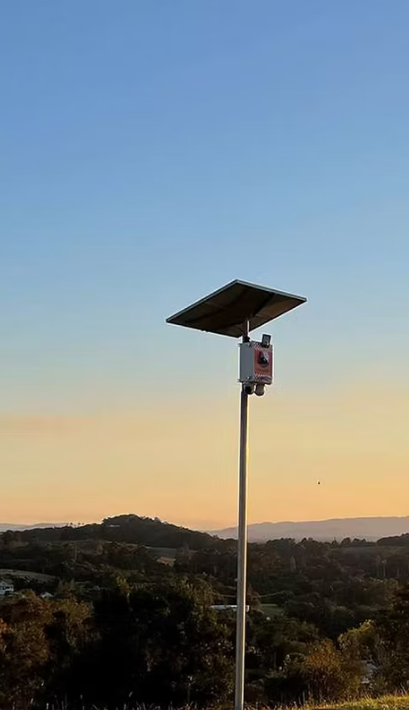
On long jobs, Timelapse and AI Reports turn the same cameras into project records. Surveillance and privacy rules differ between states, so check yours. Clear signage is common practice.
It depends on the job. For wide earthworks, a Pan & Zoom 360° tower with zoom up to 1km covers the most ground. For corridor jobs beyond mobile coverage, a Starlink Tower or solar trailer keeps alerts working. Most remote civil sites combine two or three setups.
Yes, with satellite connectivity. The Siteguard Starlink Tower combines its cameras with Starlink for remote locations without 3G or 4G coverage, so live view and alerts keep working on remote civil jobs.
If the work front moves every week or two, a road-certified trailer is easier to relocate. If a position holds for months, such as a compound or depot gate, a tower suits better. Many road jobs run both.
Yes. Siteguard's number plate recognition cameras are solar-powered and weatherproof, with night vision and built-in lighting, so they run off-grid with no cabling or mains power.
Surveillance and privacy rules vary between states and territories. Clear signage that cameras are in use is common practice and also deters intruders. Check the rules for the state your site is in.